


A patented recycling technology that extracts rare earth magnets from speakers from end-of-life cars and flat-screen TVs could lead to an important recycling stream for the UK and the domestic countries of origin of these metals. Press the punch of the magnet pile from the speaker. These stacks vary, but are all laminated stacks made of soft magnet plates and hard magnets NdFeB alloys.
Speakers account for about 20% of the amount of rare earth magnets. The team behind the project to extract rare earths from audio products (REAP) from the University of Birmingham in the UK has developed a technology called Hydrogen Recovery of Waste Magnets (HPMS).
The researchers explain that there are currently many competing technologies that rely on thermal demagnetization and grinding off surface coatings to remove magnets from end-of-life products. But they believe that the HPMS process is more economical because there are fewer energy-consuming steps to remove materials.
"HPMS works by introducing hydrogen into magnets at room temperature and near atmospheric pressure," explains Professor Allan Walton from the University's School of Metallurgy and Materials. "Hydrogen reacts with matter, passes through grain boundaries, and then enters the particles themselves. The reaction generates heat and volume expansion, which causes the material to decompose into alloy powder. The coating peels off the surface, at which point the material is also demagnetized.
Walton adds that the alloy powder is then separated from the remaining scrap and purified to remove unwanted trace elements and coating materials. Once completed, the purified powder can be processed directly back into a new magnet, "completing the short loop". According to project collaborators, the recompressed magnet has a magnetic magnet comparable to the original.
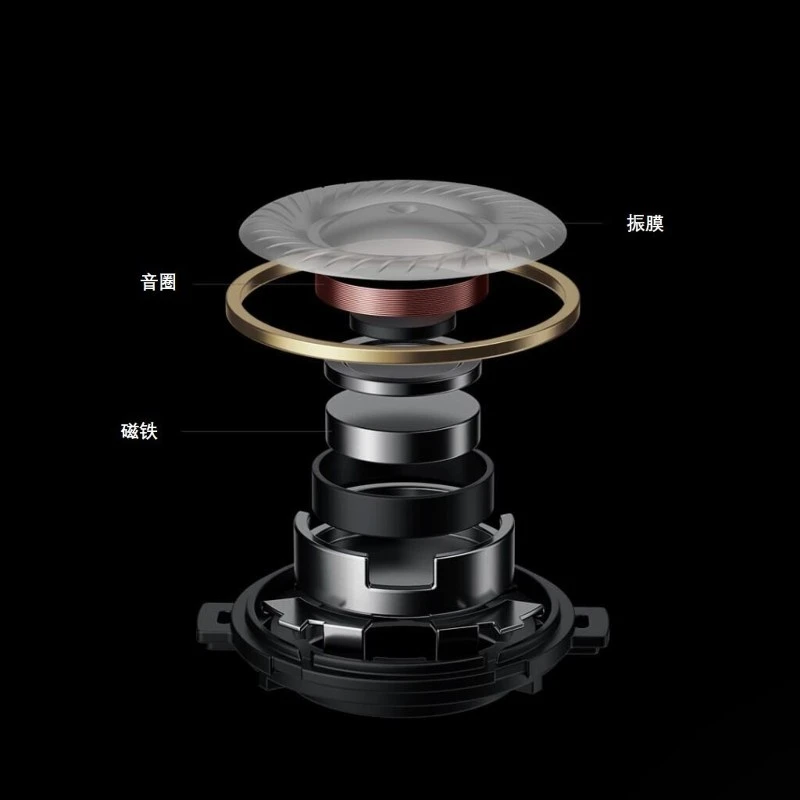
European Metal Recovery (EMR) identified suitable target products from the appropriate waste streams for the project and removed magnets using a novel punching process to make them "reactor ready" for use in downstream HPMS processes.
"This means that hydrogen can reach the magnet and the demagnetizing powder can leave the product," Walton said. Finally, the higher the magnetic yield ratio, the higher the yield of the HPMS process. The new punching process developed by EMR produces a very high yield feedstock for the downstream HPMS process.
Walton is one of four directors at HyProMag, the spin-off company responsible for the project. He explained that the REAP program aims to develop a domestic supply of recyclable rare earth magnets from multiple scrap sources.
While rare earth magnets are not used heavily in end-of-life vehicles, he noted that future models, especially electric and hybrid vehicles, will contain more rare earth magnets, which will provide important feedstock in the long term.
Analysis by the University of Birmingham and HyProMag also shows that 85% of flat-screen TVs in the UK contain NdFeB. "We estimate that in flat-screen TVs, about 34,000 kilograms of garbage are generated every year," he said.
However, quantifying recycling potential is problematic because there is currently no collection system. The university has secured funding to develop an automated pilot line at Tyseley Energy Park to extract NdFeB alloy powder for use in downstream magnet production, although it will take another year to become fully operational.
Walton said the facility will enable HyProMag to process up to 400 kilograms of NdFeb alloy powder per batch. "The extracted material can be re-fed into the UK supply chain through multiple steps, including direct remanufacturing into sintered magnets.
The pretreatment technology developed by EMR will be automated and used as one of the many raw materials for large-scale pilot lines. This will build on previous projects, for example, hard disk scrap development. In the longer term, we are looking at a wider range of end-of-life scrap.
Collaborators are evaluating several product options, including HD demagnetization powders for magnet producers, alloy ingots remelted with HD powder, alloy feedstock or magnet production for alloy feedstock or magnet production, anisotropic alloy powders (HDDRs) for bonded magnets, and sintered NdFeB magnets for automotive applications.


