


Magnet hooks have evolved significantly over the years, becoming more than just a simple utility tool. In today's industrial and consumer markets, these products serve a wide array of functions, thanks to advancements in magnetic technology and materials science. The journey of magnet hook technology showcases how technical innovations have transformed these devices into high-performance solutions for a variety of industries, including logistics, construction, retail, and home organization.
Early versions of magnet hooks were typically limited to basic designs, using standard ferrite or ceramic magnets. These products provided adequate holding force but lacked versatility in their applications. However, with the development of rare-earth magnets, particularly neodymium magnets, the potential for magnet hooks expanded dramatically. Neodymium magnets are significantly stronger than traditional magnets, offering improved holding capacity in much smaller sizes. This breakthrough enabled magnet hooks to be used in more demanding environments where space is limited, but strong holding power is essential.
One of the key innovations in magnet hook technology is the integration of multi-directional magnetic fields. Unlike traditional hooks that rely on a single magnetic pull, modern designs feature magnetic arrays that create a more stable and secure hold. This advancement ensures that the hook maintains its strength even when subjected to lateral forces, making it ideal for use in moving or vibrating environments, such as in vehicles or industrial machinery.
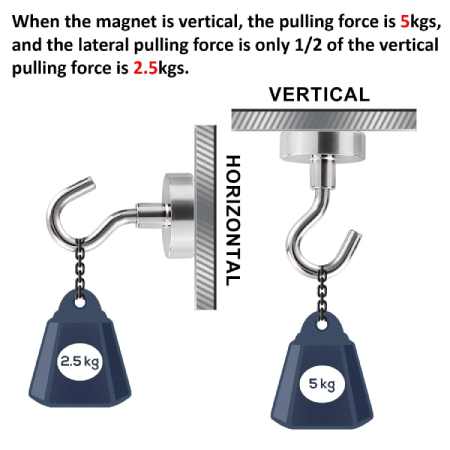
In addition to the improvements in magnetic materials and field orientation, manufacturers have also enhanced the overall durability and functionality of magnet hooks. Today, these products are often coated with corrosion-resistant materials such as nickel or zinc, ensuring long-term reliability in outdoor or harsh industrial environments. Furthermore, some magnet hooks are now designed with customizable features, such as adjustable hook sizes or rotational heads, allowing them to be adapted to specific tasks or workspace configurations.
Overall, the evolution of magnet hook technology represents a significant advancement in both material science and engineering design. As these products continue to develop, they will undoubtedly find even more innovative applications across various industries, providing users with stronger, more versatile, and reliable solutions.


