As a seasoned supplier of magnetic lifters, I've been frequently asked whether a magnetic lifter can be used for precision lifting. This question is not only relevant to our customers' operational needs but also crucial for the development of various industries that rely on accurate material handling. In this blog, I'll delve into the capabilities of magnetic lifters in precision lifting, explore their limitations, and provide insights based on our extensive experience in the field.
How Magnetic Lifters Work
Before discussing precision lifting, it's essential to understand how magnetic lifters operate. Magnetic lifters use the principle of magnetism to attract and hold ferrous materials. There are two main types: permanent magnetic lifters and electromagnetic lifters. Permanent magnetic lifters rely on the constant magnetic field generated by permanent magnets, while electromagnetic lifters create a magnetic field when an electric current passes through a coil.
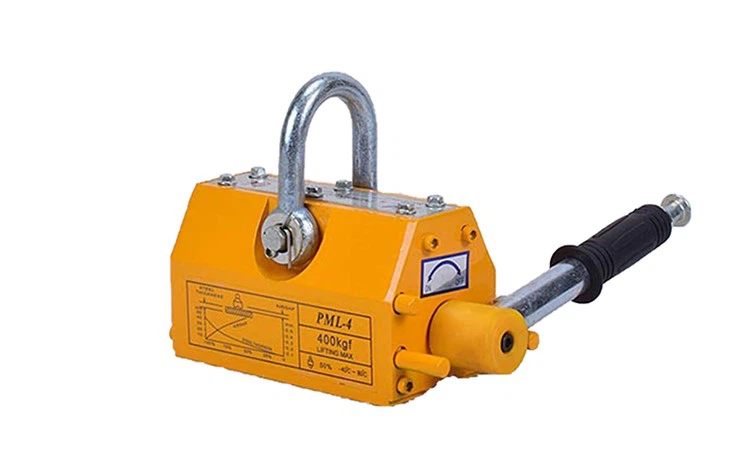
Permanent magnetic lifters are popular due to their simplicity, reliability, and energy - efficiency. They don't require a continuous power supply to maintain the magnetic force, making them suitable for various applications. For example, our 400kg Permanent Magnetic Lifter is a robust and practical solution for lifting medium - sized ferrous objects.
Electromagnetic lifters, on the other hand, offer more flexibility as the magnetic force can be easily controlled by adjusting the electric current. They are often used in large - scale industrial operations where quick and precise control of the lifting force is required.
Capabilities of Magnetic Lifters in Precision Lifting
- Accurate Positioning
Magnetic lifters can achieve a certain degree of accurate positioning. The magnetic force acts uniformly across the contact surface between the lifter and the workpiece, allowing for stable and controlled lifting. In applications where parts need to be placed precisely in a specific location, such as in assembly lines, magnetic lifters can be adjusted to ensure proper alignment. For instance, in the automotive manufacturing industry, magnetic lifters can be used to lift and position engine components with relative accuracy. - Repeatability
One of the key advantages of magnetic lifters in precision lifting is their repeatability. Once the magnetic lifter is set up correctly, it can consistently lift and place objects in the same position. This is particularly important in mass production environments where uniformity and consistency are essential. Our Lifting Magnets For Cranes are designed to provide reliable and repeatable performance, ensuring that each lifting operation is carried out with the same level of precision. - Suitability for Delicate Workpieces
Some magnetic lifters are designed to handle delicate ferrous workpieces. By carefully controlling the magnetic force, these lifters can lift fragile parts without causing damage. For example, in the electronics manufacturing industry, where small and delicate ferrous components need to be handled, magnetic lifters can be used to lift these parts with precision, minimizing the risk of scratches or other forms of damage.
Limitations of Magnetic Lifters in Precision Lifting
- Material Variations
The performance of magnetic lifters can be affected by the material properties of the workpiece. Different types of ferrous materials have different magnetic permeabilities, which can influence the strength of the magnetic attraction. For example, cast iron and stainless steel have different magnetic characteristics, and a magnetic lifter may not provide the same level of holding force for these materials. This can pose challenges in precision lifting when dealing with a variety of materials. - Surface Conditions
The surface condition of the workpiece also plays a crucial role in the effectiveness of magnetic lifters. Rough, dirty, or rusty surfaces can reduce the magnetic contact area and weaken the magnetic force. In precision lifting, even a slight reduction in the magnetic force can lead to misalignment or instability during the lifting process. Therefore, it's important to ensure that the workpiece surfaces are clean and smooth for optimal performance. - External Magnetic Interference
External magnetic fields can interfere with the operation of magnetic lifters. In industrial environments where there are other magnetic sources, such as large motors or transformers, the magnetic field of the lifter may be disrupted. This can cause unpredictable changes in the lifting force and affect the precision of the lifting operation.
Factors to Consider for Precision Lifting with Magnetic Lifters
- Lifter Selection
Choosing the right magnetic lifter is crucial for precision lifting. Consider the weight, size, and shape of the workpiece, as well as the required lifting force and precision level. Our Manual Permanent Magnet Lifter is a great option for applications that require manual control and relatively high precision. - Magnetic Force Adjustment
For electromagnetic lifters, precise adjustment of the magnetic force is essential. This can be achieved by using advanced control systems that allow for fine - tuning of the electric current. By adjusting the magnetic force according to the specific requirements of the workpiece, the risk of over - or under - lifting can be minimized. - Safety Measures
Even in precision lifting operations, safety should always be a top priority. Ensure that the magnetic lifter is properly installed and maintained, and that operators are trained to use it correctly. Regular inspections and testing of the lifter's performance can help prevent accidents and ensure the accuracy of the lifting process.
Conclusion
In conclusion, magnetic lifters can be used for precision lifting, but they have both capabilities and limitations. With proper selection, adjustment, and consideration of various factors, magnetic lifters can provide reliable and accurate lifting solutions in a wide range of applications. At our company, we are committed to providing high - quality magnetic lifters that meet the diverse needs of our customers. Whether you are in the manufacturing, construction, or any other industry that requires precision material handling, we have the right magnetic lifter for you.

If you are interested in learning more about our magnetic lifters or have specific requirements for your precision lifting needs, we encourage you to contact us for a detailed discussion. Our team of experts is ready to assist you in finding the most suitable solution for your operations.
References
- "Magnetic Materials and Their Applications" by David Jiles
- "Industrial Lifting Equipment Handbook" by John Smith