


An arc magnet is called so because of its curved shape, resembling a segment or "arc" of a circle. This specific geometry gives the magnet its name. Arc magnets are typically used in applications where a curved magnetic field is required. The arc shape is important in situations where magnets need to interact with specific geometries, such as rotating systems, motors, or magnetic assemblies that require a specific angle of attraction or repulsion.
Key Features of Arc Magnets:
Curved Shape: Arc magnets have a segmental shape, typically a quarter-circle or other portion of a circle. This allows them to fit into devices like electric motors, generators, and magnetic assemblies where the magnetic poles need to interact with a circular or curved system.
Magnetic Poles: The arc-shaped design helps direct the magnetic flux in specific directions, making them ideal for certain mechanical applications. The poles of arc magnets are typically aligned with the curve, optimizing their efficiency.
Common Uses: Arc magnets are commonly used in electric motors and generators, especially in permanent magnet motors (PMM), magnetic couplings, and other applications where the magnet must fit into a circular or curved configuration.
Why the Name "Arc Magnet" is Appropriate:
The term arc comes from the geometry of the magnet, which is a section or segment of a circle. The design is essential for ensuring proper magnetic field alignment and efficiency in devices that use rotating parts or circular mechanisms.
Common Applications of Arc Magnets:
Electric Motors: Arc magnets are often used in rotors and stators of permanent magnet motors, where their curved shape is needed to align with the rotating motion and maximize magnetic efficiency.
Wind Turbines: In wind energy generation, arc magnets are used in the rotating parts to optimize the conversion of wind energy into electrical power.
Magnetic Assemblies: They are used in magnetic couplings and other devices where a curved magnetic field is needed to transfer force or energy.
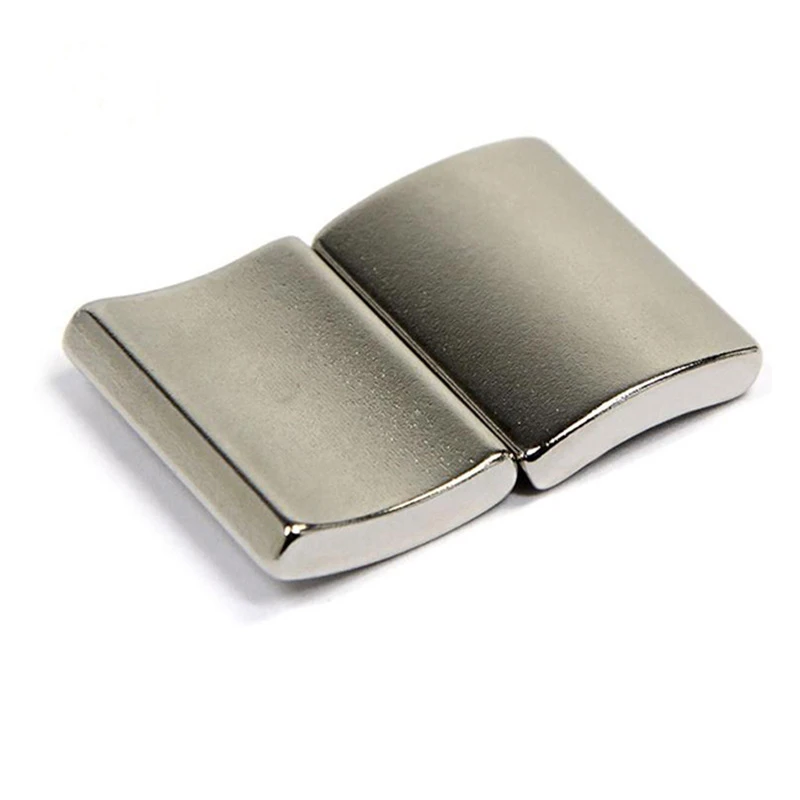
An arc magnet is called so due to its curved or arc-like shape, which is specifically designed to suit applications where a circular or rotating magnetic field is required. Its unique shape helps it perform efficiently in systems like electric motors, generators, and other technologies that benefit from this curved magnetic design.


