


A pot magnet is a powerful permanent magnet encased within a durable steel housing, often augmented with a rubber coating for enhanced functionality. This design integrates a magnet (commonly neodymium, ferrite, or samarium cobalt) into a protective "pot" or cup-shaped structure, concentrating its magnetic field through a single exposed face. Pot magnets are engineered for high clamping force, durability, and versatility in industrial, commercial, and residential applications.
How Does a Pot Magnet Work?
Pot magnets optimize magnetic efficiency through their unique construction:
Steel Housing as a Flux Guide: The steel casing-typically made of low-carbon steel (with stainless steel as an optional variant for corrosive environments)-channels the magnet's magnetic flux. Due to steel's high magnetic permeability, it acts like a flux concentrator, directing magnetic lines of force outward through the exposed face while minimizing leakage on other sides. This is analogous to how a transformer core guides electrical energy, enhancing efficiency by reducing stray magnetism.
Single Active Face: Only one side of the magnet interacts with ferromagnetic surfaces, generating a strong pull force (perpendicular attraction) and shear resistance (parallel sliding resistance) ideal for holding or mounting objects.
Reduced Air Gaps: By embedding the magnet in the steel housing, air gaps in the magnetic circuit-a major source of energy loss in bare magnets-are eliminated. This minimizes magnetic reluctance, significantly boosting performance when in direct contact with flat, thick steel surfaces.
Are Pot Magnets Stronger?
Yes, pot magnets deliver superior strength in two key ways:
Enhanced Pull Force: The steel housing amplifies the magnet's natural strength by concentrating its flux. For example, a neodymium pot magnet can achieve pull forces exceeding 130 kg when fully engaged with a flat steel surface.
Higher Shear Resistance: Pot magnets resist lateral movement better than standard magnets. While traditional magnets require shear forces equivalent to ~20% of their pull force to cause sliding, pot magnets require 33% of their pull force for the same effect. Rubber-coated variants further enhance this, often achieving shear resistance equal to or exceeding the pull force in applications with vertical or dynamic loads (e.g., holding tools on a vertical magnetic board).
Note: Performance depends on surface conditions-thin (e.g., <2mm), curved, or coated steel surfaces reduce effectiveness due to increased air gaps or reduced magnetic permeability.
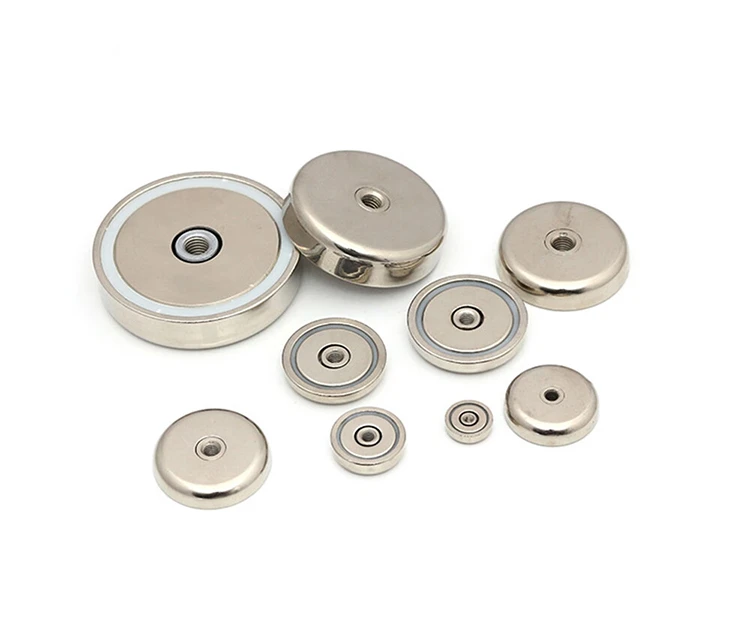
The Role of the Outer Casing
The casing is critical to a pot magnet's functionality and durability:
Steel Housing:
Protection: Shields brittle magnets (e.g., neodymium, which is prone to chipping) from impacts, corrosion, and mechanical stress. Standard housings are low-carbon steel (often zinc-plated for Anti-corrosion), while stainless steel housings are used in corrosive environments (e.g., marine or chemical industries).
Flux Concentration: As a high-permeability material, it focuses magnetic fields onto the active face, increasing efficiency by up to 50% compared to unhoused magnets.
Structural Integrity: Features like threaded inserts, hooks, or countersunk holes enable versatile mounting-e.g., bolting to machinery (threaded holes) or hanging tools (hooks).
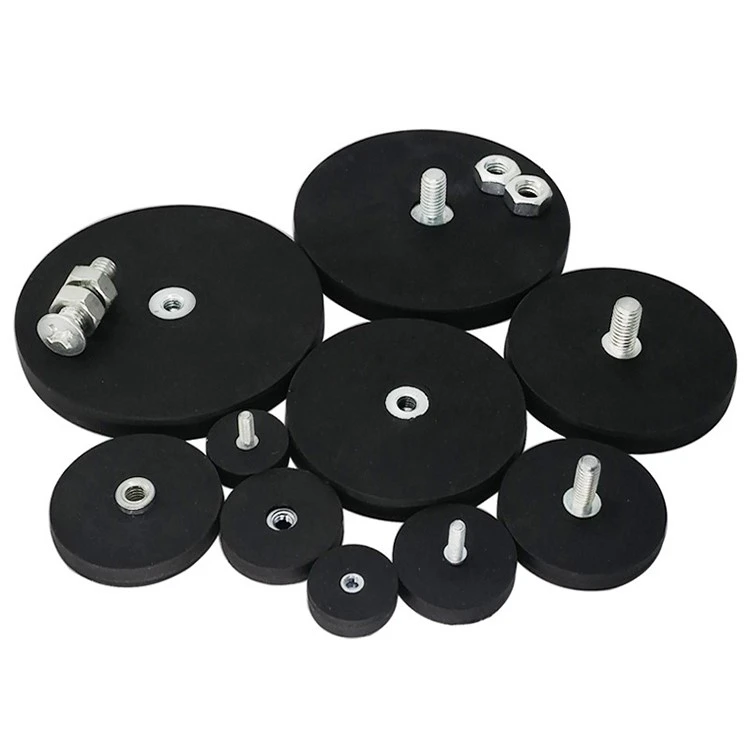
Rubber Coating (Optional):
Surface Protection: Prevents scratches on painted, delicate, or non-ferromagnetic surfaces (e.g., refrigerators, automotive panels).
Increased Friction: Enhances shear resistance by providing a non-slip interface, making rubber-coated pot magnets ideal for vertical installations (e.g., holding signage on metal frames) or vibrating environments.
Weather Resistance: Offers moderate protection against moisture, dust, and UV exposure, extending lifespan in outdoor applications.
Insulation & Vibration Damping: Reduces electrical conductivity (useful for electrical panel installations) and absorbs shocks, minimizing noise in machinery.
Material-Specific Performance Notes:
Neodymium (NdFeB): Offers the highest pull force (up to 300 kg in large models) but has a moderate temperature limit (80–200°C, depending on grade). Suitable for most industrial and residential uses.
Ferrite (Ceramic): Lower cost and higher temperature resistance (up to 250°C) but weaker pull force (10–50 kg). Ideal for budget-friendly or heat-resistant applications like oven door seals.
Samarium Cobalt (SmCo): Excels in extreme temperatures (300–550°C) and corrosive environments but is more expensive. Used in aerospace, high-temperature industrial furnaces, or marine equipment.
Applications of Pot Magnets
Industrial:
Machinery Mounting: Secure sensors, cameras, or work lights on factory equipment using threaded pot magnets for easy repositioning.
Welding Jigs: Temporarily hold metal components in place during welding, reducing setup time and preventing deformation (non-permanent, adjustable grip).
Material Handling: Lift and transport steel plates (with specialized heavy-duty models rated for tons of pull force).
Commercial:
Retail Displays: Attach signage, price tags, or promotional materials to metal fixtures without drilling, ideal for temporary or modular setups.
Medical Equipment: Hold lightweight tools or trays in hospitals, where non-magnetic (stainless steel housing) or sterile coatings may be required.
Residential:
Kitchen Organization: Magnetic knife racks (rubber-coated to protect knife handles and countertop surfaces) or tool storage on garage walls (using hooks for hanging power tools).
DIY Projects: Create removable shelf dividers, cabinet door catches, or magnetic picture frames for renters to avoid permanent fixtures.
Specialized:
High-Temperature Environments: Samarium cobalt pot magnets in steel mills or automotive exhaust systems, resisting temperatures up to 550°C.
Corrosive Settings: Stainless steel-housed, rubber-coated models in coastal installations or chemical plants, combining rust resistance with a secure grip.
Aerospace: Lightweight yet strong SmCo pot magnets for aircraft component alignment, where weight and temperature tolerance are critical.
Conclusion
Pot magnets combine focused magnetic strength, robust construction, and adaptable design to solve diverse holding and mounting challenges. Their steel housing-whether standard, stainless, or rubber-coated-optimizes flux concentration, protection, and installation flexibility. By clarifying material tradeoffs (e.g., temperature vs. cost), mechanical properties (pull vs. shear force), and application nuances, these magnets become indispensable in scenarios demanding reliability, safety, and high performance. From heavy industrial clamping to creative home organization, pot magnets offer a durable, efficient solution tailored to modern needs.


