


Ferrite Magnets
What is Ferrite Magnets
Ferrite magnets are permanent magnets mainly made of SrO or BaO and Fe2O3. Compared with other permanent magnets, ferrite magnets are hard and brittle and have lower magnetic energy. However, they are not easy to demagnetize, not easy to be corroded, and their production process is simple, and their price is low. Therefore, in the entire magnet industry, ferrite magnets have the highest output and are widely used in industrial production.
Properties of Ferrite Magnets
High Resistance to Demagnetization
Ferrite magnets exhibit high resistance to demagnetization, making them suitable for various industrial applications. This property ensures that the magnets maintain their magnetic strength over time, even in challenging environments.
Cost-Effective
One of the most significant advantages of ferrite magnets is their cost-effectiveness. Compared to other types of magnets, such as neodymium magnets, ferrite magnets are more affordable. This makes them a popular choice for applications where a balance between cost and performance is crucial.
Excellent Corrosion Resistance
Ferrite magnets are highly resistant to corrosion, which enhances their durability in various conditions. This corrosion resistance is particularly valuable in applications where exposure to moisture or harsh environments is common.
Isotropic and Anisotropic Varieties
Ferrite magnets come in isotropic and anisotropic varieties. Isotropic magnets have the same magnetic properties in all directions, while anisotropic magnets have a preferred direction of magnetization. The choice between the two depends on the specific requirements of the application.

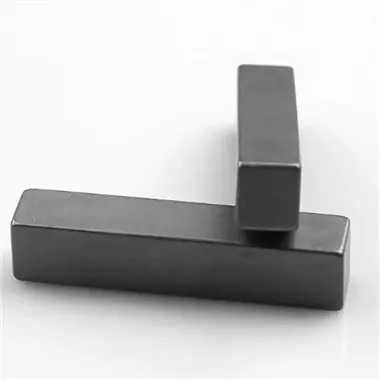
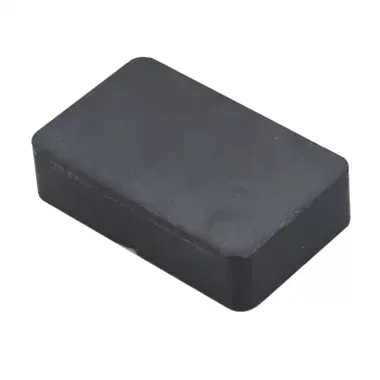
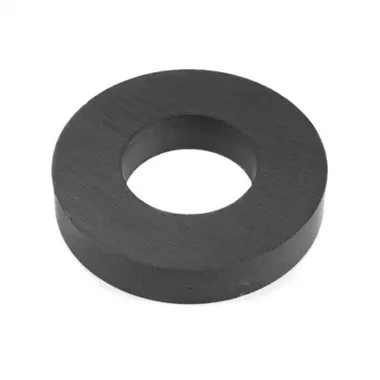

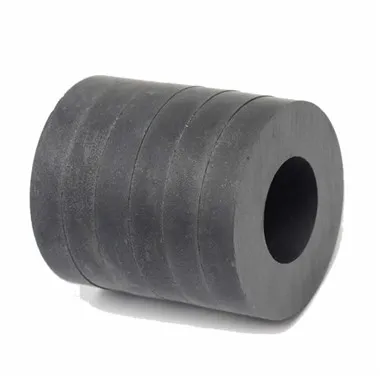
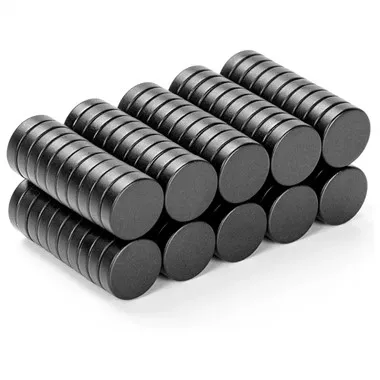
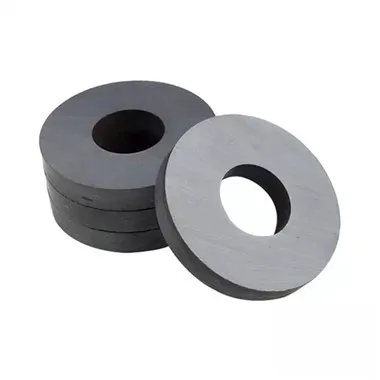

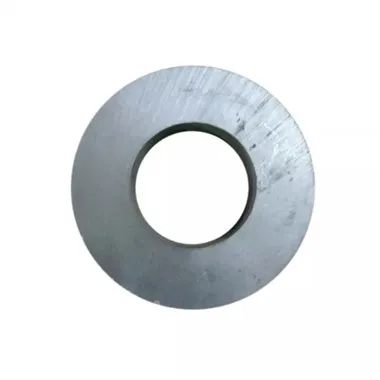
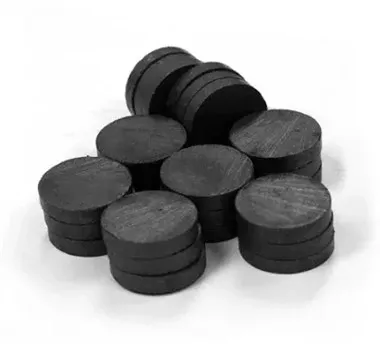
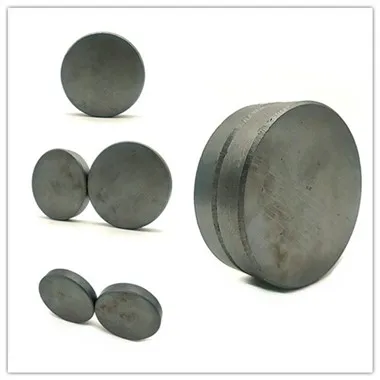
Ferrite magnets, also known as ceramic magnets. 1. Still offers benefits in terms of its unmatched cost performance and high corrosion resistance. 2. Ferrite magnets can be divided into sintered ferrite magnets and bonded ferrite magnets according to the manufacturing process. 3. Ferrite disk magnets are also measured by diameter (D) and thickness (T)
Why Choose Us
Quality Service
Service Guarantee: We maintain high standards of excellence and strive for 100% customer satisfaction! If you are satisfied with our products and services, please leave us positive feedback, and you will receive 5 feedback points.
Fast Delivery
Shipping Guarantee: Package information can be tracked. If you have not received your package after 45 days, please contact us, and we will issue a full refund.
Our Certificate
We believe that our company's success is directly related to the quality of the products we offer. They meet the highest quality standards as stipulated by ISO 9001, ISO 14000:14001, SGS guidelines, and our stringent quality control system.
Application
The company focuses on the research, development, and production of precast concrete magnets, fishing magnets, magnet hooks, and magnetic separators. Our products are widely used in precast concrete, food, medicine, chemicals, minerals, industrial filtration, recycling, and other industries.
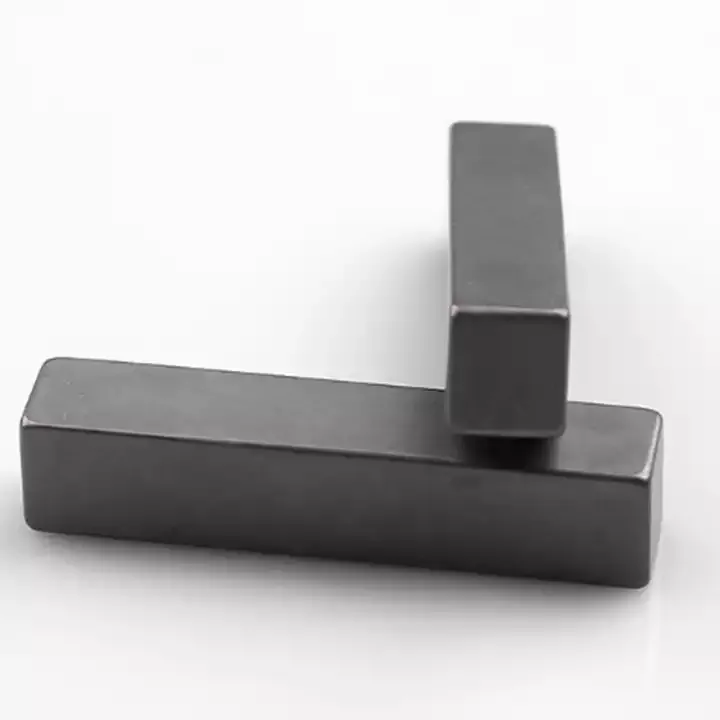
What Are the Differences Between Ferrite Magnets and Neodymium Magnets
Ferrite magnet is a metal oxide with ferromagnetism. In terms of electrical characteristics, the resistivity of ferrite is much larger than that of metal and alloy magnetic materials, and it also has higher dielectric properties. The magnetic properties of ferrite also show high permeability at high frequencies. Therefore, ferrite has become a non-metallic magnetic material widely used in the field of high frequency and weak current.
The advantages of neodymium magnets are high-cost performance and good mechanical properties. The shortcomings of neodymium magnets are low Curie temperature point, poor temperature characteristics, and easy of pulverizing and corroding, which must be improved by adjusting their chemical composition and adopting surface treatment methods to meet the requirements of practical applications. The neodymium magnet has the characteristics of small size, lightweight, and strong magnetism, which is the magnet with the best performance and price ratio at present. The advantages of high energy density make NdFeB permanent magnets widely used in modern industry and electronic technology. In the state of a bare magnet, its magnetic force can reach about 3500 Gauss.
Uses of Ferrite Magnets
Strontium Ferrite Magnets, a prominent subset of the Ferrite Magnet family, exhibit unique properties that make them indispensable in various industries. Let's delve into the diverse applications and understand how Strontium Ferrite Magnets are harnessed for their magnetic prowess.
Automotive Industry
Ferrite Magnets play a crucial role in the automotive sector, particularly in electric motors and sensors. Their robust magnetic properties contribute to the efficiency and performance of various components, making them essential in the development of electric vehicles and modern automotive technologies.
Aerospace Technology
In aerospace applications, where reliability and durability are paramount, Strontium Ferrite Magnets find their place in actuators, sensors, and navigation systems. Their resistance to high temperatures and corrosion makes them ideal for demanding environments.
Military and Defence
The military and defence industries leverage Strontium Ferrite Magnets in a range of applications, including radar systems, missile guidance systems, and electronic warfare devices. Their ability to withstand extreme conditions and provide stable magnetic performance ensures the reliability of critical military equipment.
Consumer Electronics
From small-scale applications in speakers and magnetic latches to larger roles in electric motors for appliances, Ferrite Magnets are extensively used in consumer electronics. Their cost-effectiveness and long-lasting magnetic properties make them a preferred choice for manufacturers.
Advertising Displays
Innovative advertising displays often incorporate Ferrite Magnets for their ability to create magnetic fields. This feature enables easy and secure attachment of promotional materials, making them an integral part of dynamic and interactive advertising setups.
Magnetic Assemblies and Couplings
Ferrite Magnets are employed in various magnetic assemblies and couplings across industries. These applications include magnetic clutches, couplings in machinery, and other systems where a reliable and durable magnetic connection is essential.
Academic and Research Institutions
In academic and research settings, Strontium Ferrite Magnets are utilised for experimental purposes, magnetic field studies, and as components in specialised equipment. Their versatility allows researchers to explore and understand magnetic principles in various scientific disciplines.
Design and Innovation Houses
Design houses and innovation hubs incorporate Ferrite Magnets into prototypes and product development. Their cost-effectiveness and reliable magnetic performance support the iterative process of creating new and inventive solutions.
Anisotropic Grades: These have been magnetized in a specific direction and display higher magnetic performance. Anisotropic ferrite magnets are used in applications requiring a specific magnetic orientation. They include Y30, Y32, Y33, Y35 and Y36.
High Temperature Grades: These ferrite magnets are particularly developed to thrive in high-temperature environments. They can withstand temperatures up to 350°C whilst maintaining their magnetic properties.
High/Low Coercivity Grades: The resistance capacity to magnetization of high coercivity ferrite magnets is great. This allows their use where magnet stability is critical and encompass. Alternately, low coercivity ferrite magnet grades exhibit reduced resistance to demagnetization allowing use where rapid and reversible magnetization is desired.
Isotropic Grades: These ferrite magnets lack a preferred direction of magnetization. They exhibit similar magnetic properties in all directions and include Y8T, Y10T,Y30H-1 and Y34.
Yttrium-Enhanced Grades: Yttrium (Y) oxide is used to improve the magnetic properties of some ferrite magnets. These grades generally display higher magnetic strength while offering better temperature stability e.g. Y30BH, Y33BH, and Y35BH.
Iron Oxide
The production journey begins with high-quality iron oxide, a key component responsible for the magnetic properties of ferrite magnets.
Strontium Carbonate
Strontium carbonate, another crucial ingredient, enhances the magnetic characteristics and contributes to the overall composition of the magnet.
Mixing of Ingredients
The carefully measured iron oxide and strontium carbonate are mixed thoroughly. This homogenous mixture forms the basis for creating the desired magnetic properties in the final product.
Forming the Magnet Shape
● A. Pressing
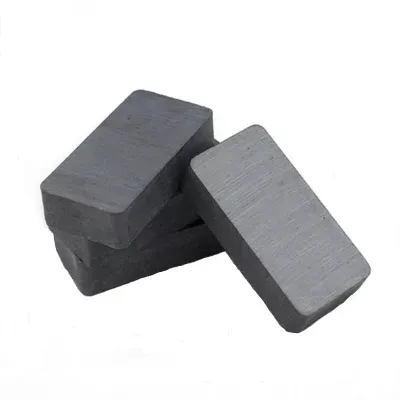
The mixed powders undergo a pressing process to form the magnet shape. This step is crucial for establishing the initial structure of the ferrite magnet.
● B. Sintering
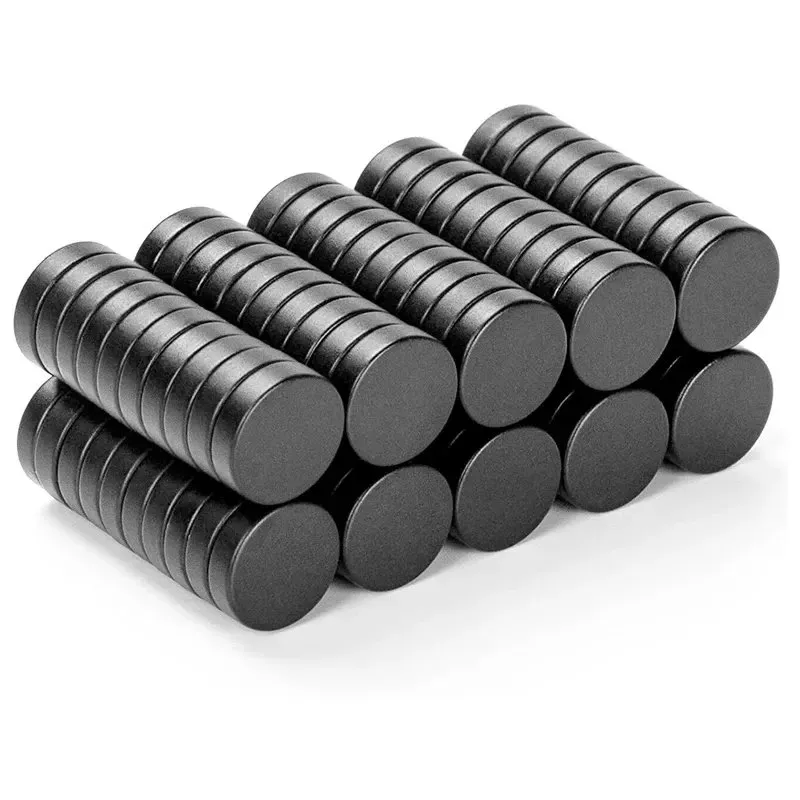
The pressed magnets are then sintered at high temperatures. During this process, the powders fuse together, creating a solid and durable magnet with a crystalline structure.
Machining (Optional)
In some cases, machining is employed to achieve specific shapes or sizes. This step ensures precision and customization based on the intended application.
Magnetization
The formed magnets undergo a magnetization process, where they are exposed to a strong magnetic field. This step aligns the magnetic domains within the material, enhancing its overall magnetic strength.
Coating (Optional)
To enhance durability and protect against corrosion, ferrite magnets can undergo a coating process. Common coatings include nickel, zinc, or epoxy, depending on the intended use.
How Do You Select a Ferrite Bead for a Circuit Design
The selection of a suitable ferrite for an application depends on several factors:
Materials
The material chosen is dependent on the frequency that requires the most attenuation. An ideal ferrite should offer the highest impedance levels at the interference frequencies, which usually cover a broad spectrum. Common ferrite materials include manganese zinc (MnZn) and nickel-zinc (NiZn) composites. MnZn is typically effective in the 0.1-MHz to the 1.5-MHz range (some can be effective up to around 10MHz). Performance in the highest-frequencies can be found with NiZn ferrite materials, which are effective at about 1 MHz up to 2 GHz due to their higher resistivity.
Shape of the Core
The core is shaped to optimize suppression performance, as well as present a usable form factor for different applications. The cylindrical core is the most common ferrite geometry used in noise-suppression applications. Installing a ferrite core around a cable can effectively reduce both conducted and radiated electromagnetic emissions. The greater the length of the cylinder, the higher the impedance.
Bias Current
The frequency response of ferrite can be altered when used in a circuit that surpasses its specified DC rating. As the DC bias increases, the magnetic material approaches saturation and its permeability decreases, causing part (or all) of the signal to fall into the non-linear region of the ferrite. This causes a considerable drop in the impedance within the ferrite’s rated bandwidth. This loss of impedance can be compensated for with an increase in the length of the core (the longer the core, the higher the impedance). An alternative way to reduce the negative effect is to introduce a small gap in the ferrite core (feasible in bisected types).
Temperature
Temperature can play a significant role in ferrite selection. Ferrites have different temperature coefficients of permeability, which means that the magnetic properties of a ferrite material can change with temperature and affect performance. In general, ferrites with a lower temperature coefficient of permeability are more stable over a wide temperature range and are, therefore, more suitable for high-temperature applications. Additionally, some ferrites have a Curie temperature at which they lose their magnetic properties. Above this temperature, the ferrite is not useful.
Relationship Between Impedance and Attenuation
Measuring ferrite impedance is one of the most common methods for selecting a ferrite. The impedance of a ferrite core is typically the most important specification for EMI applications, but in many cases, the amount of attenuation is just as relevant. The relationship between impedance and attenuation is expressed as follows:

They have a relatively wide temperature range in which they can maintain their magnetic properties. The typical temperature range for ferrite magnets is approximately:
Minimum Operating Temperature
Ferrite magnets can operate effectively at very low temperatures to about -20°C.
Maximum Operating Temperature
The upper-temperature limit for ferrite magnets is generally around 250-300°C (482-572°F). Beyond this temperature range, ferrite magnets start to lose their magnetic strength, and their performance deteriorates.

How To Extend The Service Life And Storage Life Of Ferrite Magnets
To extend the service life and storage life of ferrite magnets, some precautions need to be taken. Here are some measures:
First, ferrite magnets need to pay attention to environmental conditions when storing them. They should be placed in a dry place to avoid moisture and corrosion. This can be achieved by using airtight containers and moisture-proofing agents. Additionally, prolonged exposure to sunlight should be avoided to prevent the magnet from being exposed to oxygen.
Secondly, ferrite magnets need to avoid excessive temperatures when used. If heated to high temperatures, their magnetic properties will be greatly reduced. In order to prevent this from happening, we must pay attention to the environment in which the magnet is used. When necessary, use heat sinks to maintain temperature stability.
Finally, if the ferrite magnet is oxidized for some reason, repair measures can be taken. Restoration can be achieved by grinding, cleaning and re-processing. After repair, the magnet's magnetic properties can be restored. It should be noted that during the repair process, do not use strong oxidizing substances such as rust agents and other dilute acids.
Ferrite magnet is an important magnetic material with wide application prospects. To maintain the performance levels of this material, precautions must be taken to prevent oxidation and deterioration. Through proper storage and use, as well as necessary repairs, we can extend the service life and storage life of ferrite magnets.
Our Factory
Xiamen Qianci Magnet Technology Co., Ltd. was founded in 2000, has a history of more than 20 years, ourcompany is located in Xiamen, Fujian province, is a specialized production and sales of magnet materials, magnet components suppliers. Since the completion of the factory in 2000, our company has continuously innovated products, from the initial iron and boron magnets to now have eight series of products, the company has realized the evolution of products from single to mixed forms, and constantly strengthen its own advantages. More than 100 million new magnet magnets have been transported to the world. For motor, generator and speaker, etc. Our company has always adhered to the "quality first, customer first, quality service, abide by the contract" purpose, with high quality products, good reputation, quality service, products sold in the world Europe, whole heartedly with domestic and foreign merchants win-win cooperation, common development, create brilliant!



Certifications
We always feel that all success of our company is directly related to the quality of the products we offer. They meet the highest quality requirements as stipulated in ISO9001, ISO14000:14001 SGS guidelines and our stringent quality control system.
●ISO/TS16949, VDA6.3, ISO9001, ISO14001 certification company, RoHS, Reach, SGS compliance with products.
●More than 100 million new magnet magnets have been transported to the world. For motor, generator and speaker, etc.
●Senior experts can meet your most complicated requirements.


FAQ