


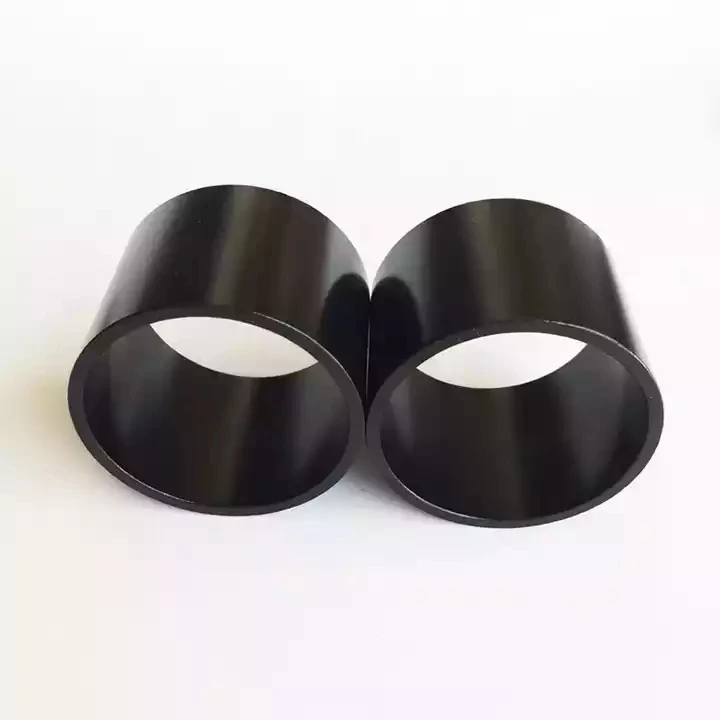
Bonded Nd₂Fe₁₄B magnets are magnets made by mixing Nd₂Fe₁₄B magnetic powder and binder through "press molding" or "injection molding". The dimensional accuracy of bonded magnets is very high, and the magnetic components can be made into complex shapes and feature one-step molding, multi-pole orientation, and the ability to integrate other components during injection molding.
Compression molding:
Raw material preparation: first, the Nd₂Fe₁₄B magnetic powder is thoroughly mixed with the binder in a specific ratio. The quality and properties of the magnetic powder are critical to the final magnet performance. Powders with different particle size distributions and chemical compositions affect the magnet's magnetic properties, density, etc. The binder serves as a binding agent for the magnetic powder. The binder serves to bind the magnetic powder together, giving the magnet a certain mechanical strength.
Mold Filling: Filling the mixed raw materials into a mold of a specific shape. The precision of the mold design directly determines the dimensional accuracy of the molded magnets, and a high-precision mold ensures that the magnets meet the required shape and dimensional tolerances.
Pressing operation: A certain amount of pressure is applied to the press to compact the raw material in the mold. Parameters such as pressure level, application time and rate need to be precisely controlled to ensure that the magnets have good densification and uniformity. Too little pressure may result in loose magnets with insufficient strength; too much pressure may damage the mold or cause internal stress concentrations in the magnets.
Demolding process: After molding, carefully remove the magnet from the mold to get the preliminary molded bonded NdFeB magnets.
Injection molding:
Mixing and pelletizing: Again, the Nd₂Fe₁₄B magnetic powder and the binder are mixed thoroughly first, and then dispersed evenly through the mixing equipment. Afterwards, the mixture is made into granules for subsequent injection processing. The shape, size and homogeneity of the granules have an important influence on the stability of the injection process and the molding quality.
Injection operation: The granular material is heated to the molten state of the binder using an injection molding machine and then injected into the mold cavity under high pressure. The parameters of the injection molding machine, such as temperature, pressure, and injection speed, need to be precisely adjusted according to the properties of the magnetic powder and binder, as well as the shape and size of the magnet. The right temperature ensures that the binder has good fluidity without affecting the properties of the magnetic powder; the pressure and injection speed affect the filling effect of the material in the mold and the molding quality.
Cooling: The material injected into the mold cavity is cooled in the mold to solidify the binder and thus shape the magnet. The cooling rate also needs to be controlled. Too fast or too slow cooling may lead to deformation, internal stresses and other problems in the magnet.
Demolding and Post-processing: After cooling and shaping, the magnet is removed from the mold. Although injection molding post-processing is relatively minor, some surface cleaning, dimensional trimming and other operations may still be required to meet the quality requirements of the final product.
What shapes can bonded neodymium magnets be made into?
Commonly, they are ring-shaped. They can also be made into round, cylindrical and tile shapes.
What are the main features of bonded neodymium magnets?
1. High dimensional accuracy.
2. Complex shapes of magnetic components can be made.
3. One-step molding.
4. Can realize multi-pole orientation.
5. Can be injected into other components during molding.
6. Maximum magnetic energy product (BH)max is usually much higher than that of ferrite magnets, which means that more magnetic energy can be stored per unit volume under certain conditions.
7. Generally requires less post-processing after molding and has higher dimensional accuracy than sintered NdFeB magnets.
8. A variety of multi-pole magnetization methods can be used.
9. Generally, the working temperature can reach about 150℃, but the actual working temperature range varies depending on the specific formula and application.
Corrosion resistance is improved by the binder, but additional protective coatings may still be required to prevent oxidation and magnetic degradation in harsh environments.


