


The popularity of magnetic toys has grown significantly over the past few years. Not only do they provide entertainment, but they also offer a wide range of benefits for children in terms of promoting cognitive and problem-solving skills. However, with so many different types of magnetic toys available, choosing the right one for your child can be overwhelming. In this post, we will classify magnetic toys to help you make an informed decision.
1. Magnetic building blocks: These magnetic toys consist of blocks of various shapes and sizes with magnets on their edges. The blocks can be easily attached to one another to create different structures, allowing children to explore their creativity and enhance their building skills.
2. Magnetic tiles: Similar to building blocks, magnetic tiles are flat, triangular or square pieces with magnets on their edges. They can be used to create patterns, mosaics, and other 2D shapes. They are great for improving fine motor skills and hand-eye coordination.
3. Magnetic rods and balls: These magnetic toys consist of bars and metal balls with magnets on their ends. They allow children to create 3D structures and shapes, and help them enhance their spatial awareness and problem-solving skills.
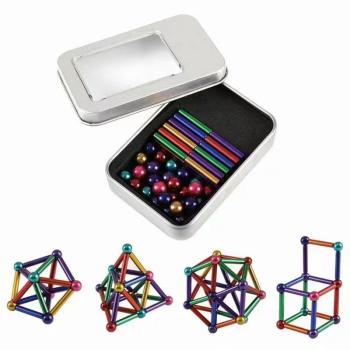
4. Magnetic puzzles: These puzzles consist of magnetic pieces that can be put together on a magnetic board to form a predetermined shape or picture. They enhance problem-solving and cognitive skills.
5. Magnetic drawing boards: These magnetic toys consist of a board with a magnetic pen and some magnetic dust particles. Children can use the pen to draw shapes, letters, and patterns on the board using the magnetic dust. It's great for developing handwriting skills and encouraging creativity.
6. Magnetic dress-up dolls: These magnetic toys consist of a magnetic doll with different magnetic outfits and accessories. Children can mix and match the various pieces to create their unique combinations. This type of toy promotes imagination, creativity, and fine motor skills.
However, it's important to note that magnetic toys also pose some potential safety hazards to children. Small magnetic parts can be a choking hazard if a child swallows them. In addition, if multiple magnets are swallowed, they can attract each other inside the body, causing serious internal injuries such as intestinal perforation or blockage.
To protect children, several measures can be taken.
First, always choose magnetic toys that are suitable for your child's age. Toys with small parts are not suitable for children under 3 years old.
Second, closely supervise children when they are playing with magnetic toys. Make sure they do not put the magnetic parts in their mouths.
Third, regularly check the magnetic toys for any loose parts. If you find any, remove the toy from the child's reach immediately.
In conclusion, magnetic toys can offer a world of benefits for children. By understanding the different classifications of magnetic toys, you can choose one that is best suited for your child's age, interests, and needs. Not only will they provide hours of fun for your child, but they will also aid in their development of cognitive, problem-solving, and social skills.


