


From Classroom Experiments to Industrial Giants
Electromagnets are everywhere - lifting scrap metal in junkyards, propelling bullet trains, and even imaging your brain in MRI machines. Unlike permanent magnets, these devices let you turn magnetism on and off with a flick of a switch. But how do they work, and why are industries increasingly relying on them? Let's dive into the science and modern innovations behind these magnetic marvels.
What Makes an Electromagnet?
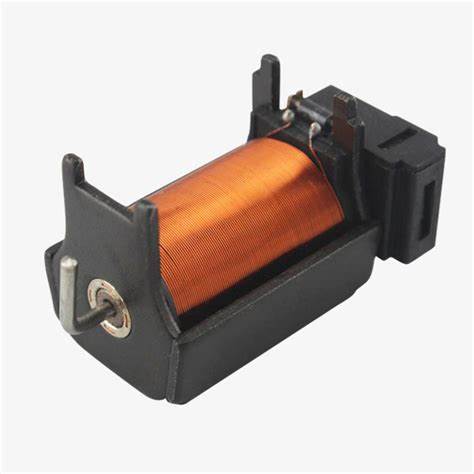
An electromagnet is a magnet created by passing an electric current through a coiled wire. Its strength depends on three factors:
1. Number of wire coils (more loops = stronger field).
2. Current intensity (higher amps = stronger magnetism).
3. Core material (iron or ferrite cores boost field strength up to 1,000×).
Key equation:
Magnetic field strength (B) = μ₀ × μᵣ × (N × I) / L
● μ₀: Permeability of free space
● μᵣ: Core material's relative permeability
● N: Number of coil turns
● I: Current (amps)
● L: Coil length
Industrial Powerhouses: Where Electromagnets Shine
1. Electromagnetic Lifting Systems
Used in scrap yards and steel mills, these giants can lift 20+ tons of metal. Modern versions use pulse-width modulation (PWM) to adjust grip strength without overheating.
2023 innovation: AI-powered sensors now detect load shapes, preventing dropped materials.
2. Maglev Trains
Electromagnets in tracks and trains create repulsive forces, levitating trains 10 cm above rails. China's latest maglev reaches 600 km/h (373 mph) with 30% less energy than 2020 models.
3. Medical Imaging
MRI machines use superconducting electromagnets (cooled to -269°C with liquid helium) to generate 1.5–3 Tesla fields - 30,000× Earth's magnetism!
Cutting-Edge Advances in Electromagnet Tech
1. High-temperature superconductors (HTS)
Traditional superconducting coils require extreme cooling, but HTS materials like yttrium-barium-copper oxide (YBCO) work at -196°C (liquid nitrogen temps). This slashes energy costs for fusion reactors and particle accelerators.
2. Soft Magnetic Composites (SMCs)
These 3D-printed iron-polymer cores reduce eddy current losses by 60%, making electromagnets more efficient for EV motors and wind turbines.
3. Smart Control Systems
Using IoT sensors, factories now adjust electromagnetic strength in real time:
Voltage tuning: ±2% field precision
Predictive maintenance: Detects coil wear 2 weeks before failure
Electromagnet Maintenance: Pro Tips for Industries
To maximize lifespan in heavy-duty applications like electromagnetic chucks or separators:
|
Issue |
Solution |
|
Coil overheating |
Install copper cooling pipes with glycol fluid |
|
Core corrosion |
Use nickel-plated cores in humid environments |
|
Insulation breakdown |
Replace wire coatings every 5–7 years (test with megohmmeters) |
Case study: A German auto plant reduced electromagnet downtime by 41% using graphene-enhanced insulation tapes.
Electromagnet vs. Permanent Magnet: When to Choose Which
|
Factor |
Electromagnet |
Permanent Magnet |
|
Strength control |
Adjustable |
Fixed |
|
Energy use |
Needs power |
Zero energy |
|
Lifespan |
10–15 years |
20–50 years |
|
Cost |
Higher upfront |
Lower maintenance |
Best for electromagnets: Applications requiring variable strength (cranes, brakes) or temporary magnetization (recycling sorters).
The Future: Electromagnets in Renewable Energy
1. Wave Energy Converters
Scotland's "Searaser" uses offshore electromagnets to capture wave motion, generating 1 MW per unit - enough for 500 homes.
2. Smart Grids
Electromagnetic fault current limiters (EFCLs) protect grids from surges, reacting 100× faster than mechanical breakers.
3. Space Exploration
NASA's Mars 2026 mission will use electromagnets to extract oxygen from iron-rich Martian soil.
Key Takeaways for Engineers & Purchasers
Core material choice impacts efficiency - laminated silicon steel reduces eddy currents by 75% vs. solid iron.
Copper vs. aluminium windings: Copper conducts better but costs 2× more; aluminium suits low-duty-cycle apps.
Regenerative braking systems in EVs recover 15–30% of energy using precisely timed electromagnet pulses.
Final Word
From junkyards to Jupiter probes, electromagnets solve problems that permanent magnets can't. For B2B buyers, partnering with suppliers who offer modular designs and real-time monitoring kits ensures adaptability in fast-changing industries like robotics and green energy.
Pro Tip: Always specify operating duty cycles (continuous vs. intermittent) when ordering custom electromagnets - it affects wire gauge and cooling needs!
Need electromagnetic chucks that maintain 95% grip force after 8 hours? Look for models with H-class insulation and ANSI/CEA-709 compliance for industrial networking.


