


The service life of magnetic filter rods can vary greatly depending on the conditions of use and maintenance methods. In general, the following guidelines should be followed:
Focus on the demagnetization rate of magnetic rods
There is a big difference in the price of magnetic rods on the market. Good magnetic rods are made of high-quality sintered NdFeB magnets and are not prone to demagnetization as long as they are well maintained and cleaned on a daily basis. In addition, the following factors will also affect the demagnetization rate of the magnetic bar.
1. High temperature (beyond the temperature resistance level of the magnet itself).
High temperatures have a significant impact on the demagnetization rate of a magnetic bar, mainly through two mechanisms: reversible and irreversible loss of magnetization.
Reversible loss of magnetization:
When a magnet is heated but still below its maximum operating temperature, the magnetization is temporarily reduced. This loss is reversible; once the magnet cools down, it usually regains its original magnetic properties. For example, a neodymium magnet loses about 0.11% of its magnetic properties for every 1°C increase in temperature, but this loss is reversible as long as the maximum operating temperature is not exceeded.
Irreversible loss:
If the temperature exceeds the maximum operating threshold but remains below the Curie temperature, the magnet may be irreversibly damaged. This means that even after cooling, the magnet cannot recover to its original strength. Thermal agitation at high temperatures disrupts the alignment of the magnetic domains, leading to a permanent reduction in magnetization. For example, standard neodymium magnets have a maximum operating temperature of about 80°C, above which they begin to lose their magnetic properties irreversibly.
Curie temperature:
Each magnetic material has a specific Curie temperature above which it completely loses its ferromagnetism and becomes paramagnetic. For example, neodymium magnets permanently lose their magnetic properties when heated above about 310-400°C, depending on their specific composition.
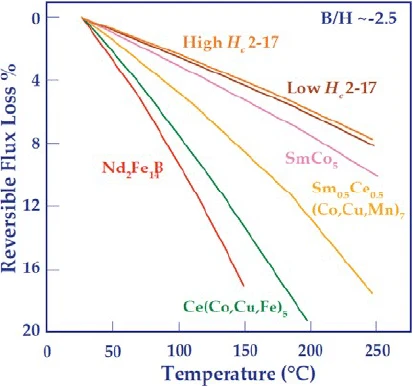
Material-specific reactions:
Different types of magnets react differently to heat:
Neodymium magnets: Maximum operating temperature is about 80°C; significant loss occurs above this temperature.
Samarium cobalt magnets: perform better at high temperatures, with loss above 350°C.
Ferrite magnets: more resistant to demagnetization at high temperatures, but still gradually lose strength.
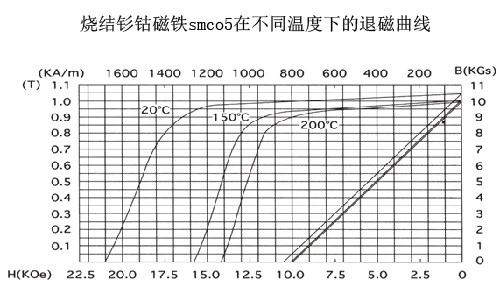
2. The magnet material itself
Intrinsic Coercivity (Hci):
Intrinsic coercivity is a measure of a magnet's ability to withstand external demagnetizing forces. Materials with higher Hci values, such as samarium cobalt, are more resistant to demagnetization than materials with lower Hci values, such as neodymium iron boron.
Geometry and size:
The shape and size of the magnet also play a vital role in its anti-demagnetization properties. Magnets with a higher length-to-diameter (L/D) ratio tend to resist demagnetization more effectively due to a reduced self-magnetizing field.
3. Strong External Magnetic Fields
Exposure to strong external magnetic fields can also lead to the demagnetization process, especially if these fields are opposite to the magnet's own magnetic field. This effect is exacerbated by thermal agitation at elevated temperatures, which disrupts the alignment of magnetic domains within the material.
4. Impact
Impacts can severely affect the demagnetization rate of a magnetic bar, primarily through mechanical stresses and changes in the physical structure of the magnet. The following is an overview of how impact affects this process:
Mechanisms of demagnetization due to impact
Mechanical Stress:
When a magnetic bar is shocked, mechanical stresses are generated which disrupt the alignment of the magnetic domains. Since the orderly arrangement of the magnetic domains is essential to maintain magnetization, this misalignment leads to a reduction in magnetic strength.
Microstructural changes:
Shock can cause microcracks or structural defects within the magnet material. These changes can result in localized areas of altered magnetic properties, leading to increased susceptibility to demagnetization.
Irreversible demagnetization:
Severe impacts can lead to irreversible demagnetization, where the magnet permanently loses a significant portion of its strength. For example, studies have shown that some types of permanent magnets, such as NdFeB, can lose more than 85% of their magnetization when subjected to extreme conditions or mechanical shock.
Depends on material properties:
Different magnetic materials react differently to impact forces:
Neodymium magnets (NdFeB): are highly sensitive to temperature and mechanical shock, which can result in a significant loss of strength.
Samarium Cobalt (SmCo): Higher impact resistance due to better thermal and mechanical stability.
Ferrite magnets: Generally more resistant to shocks, but still prone to demagnetization under extreme conditions.
Shock energy:
Shock energy plays a critical role; higher energy shocks are more likely to cause significant demagnetization. The threshold at which a magnet begins to lose strength due to a shock varies depending on the type of material and its inherent properties.
5. Humid environments
Humid environments can seriously affect the demagnetization rate of magnetic rods, primarily through corrosion and moisture-related degradation.
Corrosion:
Iron based magnets: Conventional iron magnets are highly susceptible to rust when exposed to moisture. Rust or iron oxide is non-magnetic and reduces the effective magnetic force when it forms on the magnet surface. Over time, the accumulation of large amounts of rust can lead to a complete loss of magnetism.
Neodymium Magnets: These magnets are composed of iron, boron and neodymium and are particularly susceptible to corrosion due to their high iron content. Even ambient humidity can trigger corrosion, leading to a rapid loss of magnetic properties. A protective coating is often required to reduce this risk.
Material-specific countermeasures:
Samarium Cobalt (SmCo) Magnets: Samarium Cobalt (SmCo) magnets offer excellent resistance to moisture and corrosion compared to neodymium and iron magnets. They are suitable for use in humid environments and marine applications with no significant loss of magnetic properties.
Effect on magnetic properties:
Humidity also affects the temperature stability of the magnet, which indirectly affects the magnetic properties. Increased humidity may cause localized heating or changes in thermal conductivity, which can further affect magnet performance. For example, if humidity causes condensation on the surface of the magnet, this can create conditions that promote corrosion or thermal fluctuations that can affect magnetization.
Long-term stability:
Prolonged exposure to high humidity can have a cumulative effect on all types of magnets, and may lead to irreversible loss of strength if corrosion or humidity degradation is not effectively controlled.
Finally, the service life of these filters is affected by several factors, including frequency of use, type of filter material, and level of maintenance. Regular cleaning and timely replacement of wear parts is critical to maintaining optimal performance and extending filter life. If the magnetic force drops more than 30%, or if the stainless steel cap is damaged, it is recommended that the filter rod be replaced to ensure effective operation.


