


Ferrite magnets are pretty cool. They've got all sorts of physical properties that matter a ton for how well they work and where we can use 'em.
Magnetic Properties
Ferrite magnets are ferromagnetic. That means they can keep a magnetic field even after the outside magnetic field is gone. This is super handy! Like in small electric motors, speakers, or magnetic separators, we need that lasting magnetic field. Another important thing is coercivity. It's how well the magnet resists getting demagnetized. Ferrite magnets usually have a middle-of-the-road coercivity. So, they can keep their magnetization during normal use, but it's not too hard to magnetize or demagnetize them if we need to.
Density
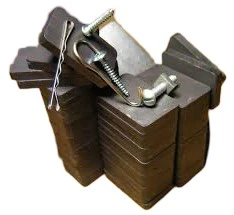
The density of these magnets is usually between 4.8 - 5.3 g/cm³. The chemicals in the ferrite, like in Mn - Zn ferrites where we've got manganese, zinc, and iron oxides mixed together, change the density. Compared to some other permanent magnets like neodymium magnets, ferrite magnets are lighter. This is a big plus in places where weight matters, like in portable electronics or aerospace parts. Every little bit of weight we can save is a win!
Curie Temperature
The Curie temperature of ferrite magnets depends on what they're made of. For regular ones, it can be anywhere from about 200 - 600 °C. When it's cooler than the Curie temperature, the magnets stay ferromagnetic. But once it gets hotter, the magnetic domains inside start to go all wonky, and the magnet loses its ferromagnetic mojo and becomes paramagnetic. This is important in some applications. Take cars, for example. The engine area can get hot. So, if we're using ferrite magnets in things like sensors or actuators in cars, we gotta know the Curie temperature to make sure they work right.
Electrical Conductivity
Ferrite magnets aren't great at conducting electricity. And you know what? That's a good thing! In applications where we need both magnetic stuff and electrical insulation, like in transformers, ferrite cores made of these magnets are perfect. They can move magnetic energy around really well and keep electrical losses low because they don't conduct electricity well. This means fewer short-circuits and a more efficient transformer.
Now, let's talk about making ferrite magnets, especially Mn - Zn ones. You'd think if you have the right raw materials, everything would be smooth sailing. But the physical properties can throw a wrench in the works. Iron oxide is a big part of the Mn - Zn ferrite formula, usually around 70%. It's got some key physical features like average particle size (APS), specific surface area (SSA), and bulk density (BD).
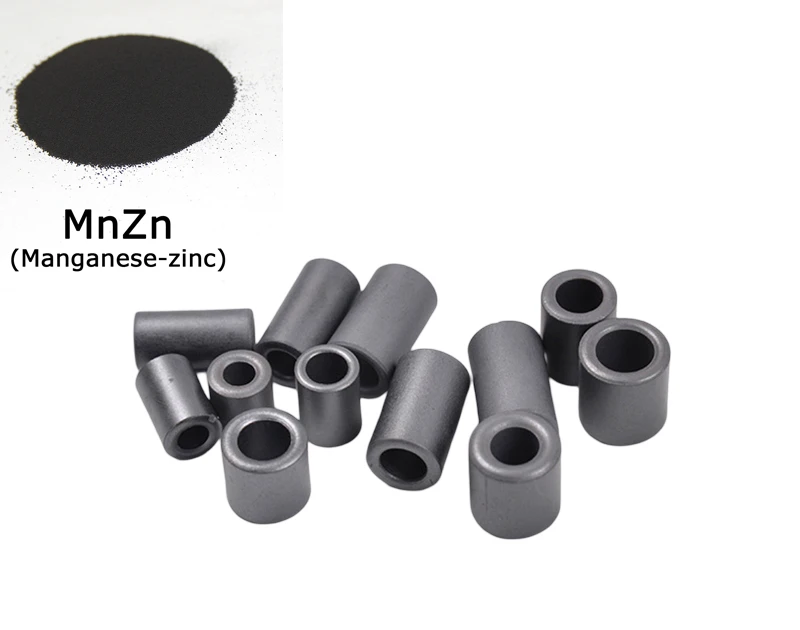
The APS of iron oxide does affect the APS of the final ferrite magnet powder, but it's not the only thing. Smaller APS in iron oxide usually means a more reactive starting material. This can speed up the chemical reactions when we're making the magnet powder. But if the particles are too tiny, it can be a headache. They won't pack together well during compaction, and during sintering, they might cause problems like abnormal grain growth or clumping.
On the other hand, if the APS of iron oxide is too big, during pre-sintering, the reaction is mostly just about forming the spinel phase because of the large particle size. But it's not true that the grain can't grow at all. It just needs more energy during sintering.
Let me tell you a story. One of my buddies works at a factory that makes ferrite magnets. They once tried to use a new batch of iron oxide with a much larger APS than usual. They thought it wouldn't be a big deal. But during the sintering process, they ran into all sorts of issues. The magnets just weren't coming out right. The magnetic properties were off, and the microstructure was a mess. They had to spend a lot of time and money figuring out how to adjust the process to make it work with that new iron oxide. In the end, they learned that optimizing the physical properties of iron oxide and controlling the whole manufacturing process is super important to get great-quality ferrite magnets.


