


Samarium cobalt (SmCo) and ferrite magnets are both widely used in various industries, but they have distinct differences in terms of material composition, magnetic properties, cost, and applications. Below, we'll explore the key differences between these two types of permanent magnets.
1. Material Composition
Samarium Cobalt Magnets:
Samarium cobalt magnets are made from a combination of samarium (Sm) and cobalt (Co), which are rare-earth elements. These magnets are part of the rare-earth magnet family and are known for their high magnetic strength and temperature stability.
Ferrite Magnets:
Ferrite magnets, also known as ceramic magnets, are made from a combination of iron oxide (Fe2O3) and barium or strontium carbonate. These magnets are generally less expensive to produce than rare-earth magnets and are more common in everyday products.
2. Magnetic Strength
Samarium Cobalt Magnets:
Samarium cobalt magnets are stronger than ferrite magnets. They have a high coercivity, meaning they are resistant to demagnetization, and can produce a stronger magnetic field compared to ferrite magnets of the same size. This makes them ideal for high-performance applications where strong magnetism is required.
Ferrite Magnets:
Ferrite magnets are weaker compared to samarium cobalt magnets. While they still retain magnetic properties, they have lower energy products (BHmax) and are generally less powerful. However, their magnetic properties are sufficient for many standard applications.
3. Temperature Resistance
Samarium Cobalt Magnets:
Samarium cobalt magnets are highly temperature resistant, with the ability to maintain their magnetic properties at temperatures as high as 300°C or more, depending on the grade. This makes them ideal for use in environments that involve high temperatures, such as motors, sensors, and aerospace applications.
Ferrite Magnets:
Ferrite magnets also perform well in high-temperature environments but typically have a lower maximum operating temperature compared to samarium cobalt magnets. They are usually stable up to around 250°C but may lose some magnetic strength at temperatures above that threshold.
4. Cost
Samarium Cobalt Magnets:
Due to the use of rare-earth metals, samarium cobalt magnets are more expensive than ferrite magnets. The cost of raw materials and the manufacturing process contributes to their higher price point. As a result, they are typically used in applications where performance justifies the cost.
Ferrite Magnets:
Ferrite magnets are much more affordable because they are made from abundant materials like iron and barium or strontium. This makes them a cost-effective option for many standard applications, especially where high strength is not necessary.
5. Durability and Corrosion Resistance
Samarium Cobalt Magnets:
Samarium cobalt magnets are highly durable and offer good corrosion resistance, particularly compared to other rare-earth magnets like neodymium magnets. However, they may still require additional coatings (such as nickel or gold plating) for enhanced protection in certain applications.
Ferrite Magnets:
Ferrite magnets are naturally corrosion-resistant due to their ceramic composition. They do not require any protective coatings, making them ideal for use in harsh environments. However, they are more brittle compared to samarium cobalt magnets and may break or crack if subjected to mechanical stress.
6. Applications
Samarium Cobalt Magnets:
Samarium cobalt magnets are used in applications that require high strength, temperature stability, and resistance to demagnetization. Common uses include:
Aerospace and defense (e.g., in motors, actuators, and sensors)
High-performance motors (e.g., in electric vehicles, robotics, and medical devices)
Magnetic resonance imaging (MRI) machines
Precision instruments and high-speed motors
Ferrite Magnets:
Ferrite magnets are widely used in applications that do not require extreme strength or high temperature resistance. They are ideal for:
Speakers (e.g., in audio equipment)
Electric motors (e.g., in toys, home appliances, and low-power devices)
Magnetic clasps, refrigerator magnets, and door latches
Magnetic separation and industrial applications in wet or corrosive environments
7. Size and Shape Flexibility
Samarium Cobalt Magnets:
Samarium cobalt magnets can be manufactured in a variety of sizes and shapes, but they tend to be more fragile and prone to chipping during the manufacturing process. Despite this, they can be made into small, high-performance magnets for precision applications.
Ferrite Magnets:
Ferrite magnets are generally more robust and easier to produce in a wide range of shapes, including rings, discs, and blocks. They are particularly suitable for larger industrial applications, where size and cost are critical considerations.
8. Magnetization
Samarium Cobalt Magnets:
Samarium cobalt magnets are typically anisotropic, meaning they have a preferred direction of magnetization. This allows them to achieve maximum magnetic strength when magnetized in the correct orientation.
Ferrite Magnets:
Ferrite magnets can be either isotropic (magnetized in any direction) or anisotropic (magnetized in a specific direction), depending on the manufacturing process. However, their magnetic strength is generally lower than that of samarium cobalt magnets.
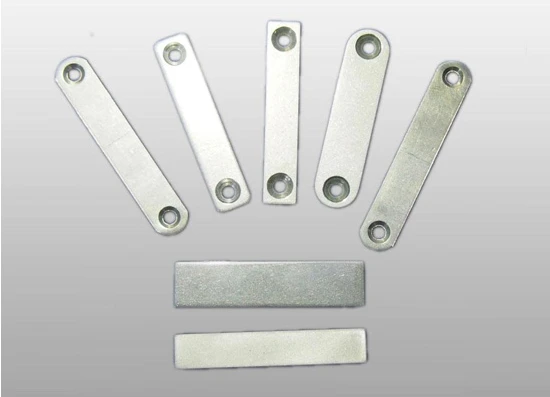
While both samarium cobalt and ferrite magnets are widely used in different applications, they differ significantly in their magnetic strength, temperature resistance, cost, and suitability for specific industrial uses.
Samarium cobalt magnets are best suited for high-performance applications requiring high magnetic strength, temperature resistance, and corrosion resistance. They are ideal for aerospace, medical, and high-precision motors.
Ferrite magnets are more suitable for cost-sensitive applications where moderate strength and durability are sufficient, such as in speakers, motors, and household devices.
At QCM, we offer a wide range of both samarium cobalt and ferrite magnets tailored to meet your specific requirements. Contact us for more information or assistance in selecting the right magnet for your application!


