


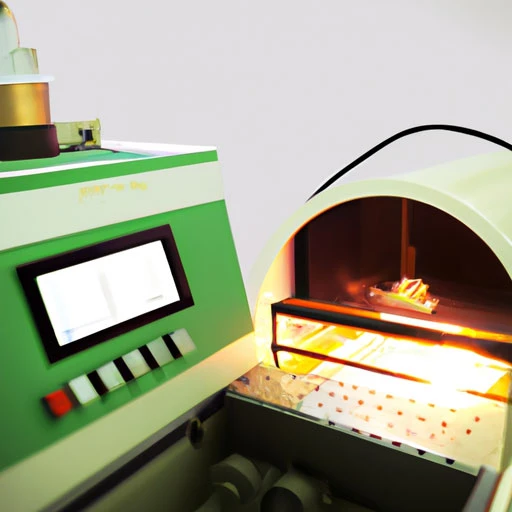
Sintered NdFeB (Neodymium Iron Boron) is an anisotropic magnet produced through a process known as powder sintering. This process involves heating the green body (a compacted powder mixture) to a temperature below its melting point, followed by a period of heat treatment to improve the magnetic performance and mechanical properties of the final product. During sintering, the magnet undergoes significant physical and chemical changes that are essential for achieving high-quality magnets suitable for various industrial applications.
Understanding the Sintering Process of NdFeB
Initial State and Powder Compaction:
The process begins with NdFeB powder being compacted into a "green" body. At this stage, the relative density of the powder is about 50% to 70%, and the porosity ranges from 30% to 50%. The contact between individual particles is mechanical, meaning the strength of the bonds between them is relatively weak.
If excessive pressure is applied during compaction, it may cause some particles to deform elastically or plastically, which could lead to cracks or poor bonding, resulting in a lower magnetic performance.
Physicochemical Changes During Sintering:
When the green body is subjected to heat during sintering, several important changes occur:
Elimination of Adsorbed Gases: The gas adsorbed on the surface of the powder particles (such as water vapor) is removed, alongside the volatilization of organic materials such as oils, antioxidants, and lubricants.
Reduction of Oxides: The reduction of oxides on the surface of the powder particles enhances the material's purity and improves its overall magnetic properties.
Particle Contact Transition: The contact between particles shifts from mechanical contact to a physicochemical contact, which leads to the formation of metal and covalent bonds. This creates a "sintered neck" where the particles begin to fuse together, forming stronger bonds and increasing the material's density.
Atom Diffusion and Grain Growth:
The sintering process promotes atomic diffusion and material migration. This results in the growth of the sintered necks, grain growth, and an overall increase in the density of the material.
The porosity of the green body causes it to have high surface energy, which is unstable. To reduce the surface area and energy, the powder particles begin to bond more strongly, shrinking the green body into a dense sintered structure.
Final Properties of Sintered NdFeB:
After sintering, NdFeB magnets acquire a significantly higher density and strength compared to the initial compacted powder. The atomic rearrangement during the sintering process results in high-performance magnets with enhanced magnetic properties and improved mechanical strength.
Applications of Sintered NdFeB Magnets
Sintered NdFeB permanent magnets are widely used due to their outstanding magnetic properties. These magnets are integral to various industries and applications, including:
Electronics: Used in electric motors, hard drives, and speakers.
Electric Machinery: Found in motors for electric vehicles (EVs), wind turbines, and industrial machinery.
Medical Equipment: Used in MRI machines, magnetic resonance imaging (MRI) equipment, and other medical devices.
Toys and Packaging: Essential components in many magnetic toys and packaging materials.
Aerospace: Utilized in aerospace technologies, including sensors, actuators, and propulsion systems.
Magnetic Separators: Employed in industries for separating ferrous materials from non-ferrous materials.
Conclusion
The sintering process of NdFeB is a critical step in manufacturing high-performance magnets with excellent magnetic properties. This process enhances the strength, density, and performance of NdFeB magnets, making them suitable for a wide range of applications in electronics, medical equipment, aerospace, and more.
At QCM, we specialize in the production of high-quality sintered NdFeB magnets and are committed to delivering the best products to meet your specific needs. Visit our factory to learn more and consult with us on your magnet requirements. We look forward to helping you choose the right NdFeB magnet for your applications.


