


The earliest magnets were not invented but rather discovered in the form of a naturally occurring mineral called magnetite, also known as lodestone. This discovery is often attributed to the ancient Greeks. According to legend, a shepherd named Magnes, who lived in the region of Magnesia (now part of modern Turkey), noticed that the iron tip of his staff and the nails in his shoes were attracted to a rock containing magnetite. This natural magnetism was also observed in other ancient cultures, such as in China, where magnetite was used in various applications, including early compasses.
While magnetite was naturally occurring, humans quickly recognized its potential and began to develop ways to harness its properties. The Chinese are credited with inventing the first practical magnetic compass, which was used for navigation as early as the 8th century AD. This innovation revolutionized maritime exploration and trade, allowing sailors to navigate more accurately and safely.
In the 16th century, the English scientist William Gilbert conducted extensive studies on magnetism and was the first to use scientific methods to investigate the phenomenon. His work laid the foundation for understanding the Earth as a giant magnet and paved the way for further exploration of magnetic properties.
The invention of electromagnets marked a significant leap in the development of magnetic technology. In 1820, the Danish physicist Hans Christian Ørsted discovered the relationship between electricity and magnetism, which led to the development of electromagnets by William Sturgeon in 1825. Electromagnets, which generate a magnetic field when an electric current is passed through them, have since become integral to various industries, including manufacturing, transportation, and electronics.
Today, magnets are ubiquitous in modern technology. They are used in everything from small electronic devices to large industrial machinery. In the electronics industry, magnets are crucial for the operation of hard drives, speakers, and electric motors. In the medical field, magnetic resonance imaging (MRI) relies on powerful magnets to create detailed images of the body's internal structures.
The automotive industry also benefits from magnetic technology, with applications ranging from anti-lock braking systems to hybrid and electric vehicles, where magnets are used in the construction of electric motors. Furthermore, the renewable energy sector utilizes magnets in wind turbines and other energy generation systems to convert mechanical energy into electricity efficiently.
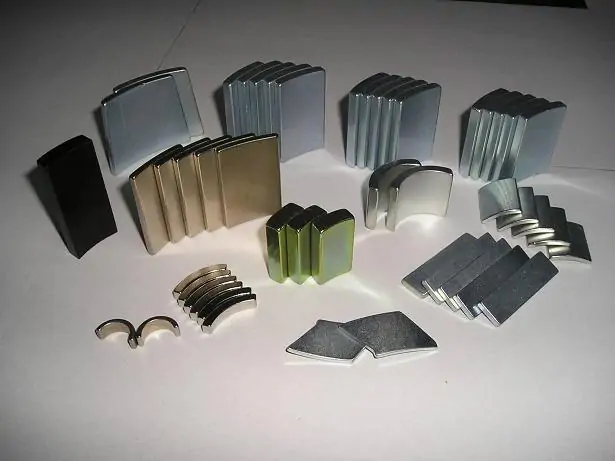
In conclusion, while magnets were not invented by humans in the traditional sense, their discovery and subsequent development have been driven by human ingenuity. From the natural magnetite found by ancient shepherds to the sophisticated electromagnets used in modern technology, the evolution of magnets is a testament to human curiosity and innovation. As we continue to explore and understand the properties of magnetism, we can expect even more groundbreaking applications in the future.
QCM factory is a professional production of magnet factory, with eight magnet series, to meet your diverse needs, welcome to choose and buy


