


As a leading manufacturer of rare earth permanent magnet materials, QCM understands that selecting the right Neodymium Iron Boron (NdFeB) magnet for your application is critical for achieving optimal performance. NdFeB magnets are among the most powerful and versatile permanent magnets available, making them an ideal choice for numerous industries, including automotive, electronics, and renewable energy. This article outlines the key parameters of NdFeB magnets and provides guidance on how to choose the right magnet for your specific needs.
Key Parameters of NdFeB Magnets
Magnetic Properties
Residual Magnetism (Br): This parameter indicates the strength of the magnet after it has been magnetized. The higher the residual magnetism, the stronger the magnet remains after the external field is removed. It is measured in units of Tesla (T).
Coercive Force (Hc): The coercive force measures the magnet's resistance to becoming demagnetized. A higher coercive force indicates better resistance to external magnetic fields and temperature fluctuations.
Maximum Energy Product (BHmax): This is the most important parameter for NdFeB magnets, representing the maximum stored energy. It is measured in Mega-Gauss Oersteds (MGOe). A higher BHmax value means the magnet can store more energy and thus provide greater magnetic strength.
Curie Temperature (Tc): The Curie temperature is the temperature above which the magnet loses its magnetization. NdFeB magnets typically have a Curie temperature between 310°C and 400°C, depending on the grade.
Mechanical Properties
Density: The density of NdFeB magnets is crucial as it affects the magnet's volume and weight. This is particularly important in applications where space and weight are critical, such as in motors and aerospace components.
Compressive Strength: NdFeB magnets are brittle and can fracture easily under mechanical stress. The compressive strength gives an indication of the magnet's ability to withstand physical forces without breaking.
Magnetization Direction: The orientation of the magnetic poles, whether radial or axial, affects the performance of the magnet in different applications.
Temperature Stability NdFeB magnets perform best at room temperature or slightly higher. However, certain grades of NdFeB are optimized for higher temperature applications. If your application involves high temperatures, selecting a magnet with an appropriate temperature coefficient is essential to ensure stable performance over time.
Surface Coating To protect the magnet from corrosion, NdFeB magnets are often coated with materials such as nickel, zinc, or epoxy. The choice of coating depends on the environment in which the magnet will be used. For example, nickel coatings provide corrosion resistance in mild environments, while epoxy coatings are more suitable for harsher conditions.
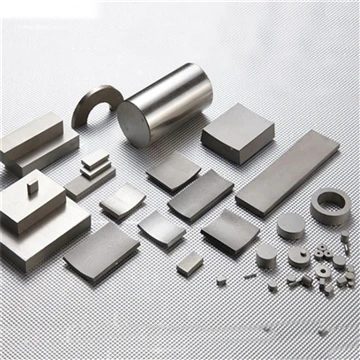
How to Choose the Right NdFeB Magnet?
When selecting NdFeB magnets, consider the following factors to ensure you get the best match for your application:
Application Requirements: Identify the specific needs of your application in terms of magnetic strength, size, shape, and operating temperature. For example, in motors, the magnet's energy product is crucial for efficient performance, while in sensors, you may prioritize stability and precision.
Magnetic Strength: Choose a magnet with the appropriate residual magnetism and maximum energy product for your needs. If your application requires a stronger magnetic field, a higher BHmax value is preferable. Conversely, if space or weight is a limitation, you may want to prioritize density and energy efficiency.
Operating Environment: If your magnet will be exposed to high temperatures or harsh environments, consider selecting a higher-grade NdFeB magnet with an enhanced temperature coefficient and corrosion-resistant coating.
Cost-Effectiveness: Higher-grade NdFeB magnets with enhanced properties tend to be more expensive. Evaluate your budget in relation to the performance requirements and consider whether a slightly lower-grade magnet might meet your needs without excessive cost.
Customization Options: At QCM, we offer a wide range of customization options, including size, shape, coating, and magnetization direction. We can work closely with you to tailor the magnets to your exact specifications, ensuring the highest performance and efficiency.
Conclusion
Choosing the right NdFeB magnet involves a careful assessment of the key parameters, such as magnetic properties, mechanical properties, temperature stability, and surface coatings. By understanding these parameters and how they relate to your application, you can ensure that the selected magnet meets your performance requirements. At QCM, we are committed to providing high-quality NdFeB magnets tailored to your specific needs, ensuring optimal performance and reliability in every application.


