


With the development of the market, magnetic materials are widely used in industrial equipment, so far, the most used in the industrial field is motors. Permanent magnet is an important core component of permanent magnet motor, compared with traditional motor, the motor with permanent magnet has the advantages of high efficiency, large torque, constant speed with load, etc., compared with synchronous motor, it can consume less current.
First, ferrite motor magnet
Ferrite permanent magnet is the cheapest magnet of magnetic materials, compared with other magnetic materials, the relative magnetic properties are low, but it has strong anti-demagnetization ability and excellent corrosion resistance, often used in DC motors.
Operating temperature
Ferrite magnets have a maximum operating temperature of about 250 degrees Celsius or higher, and the Curie temperature is about 450 degrees Celsius.
Good corrosion
Ferrite magnets have good corrosion resistance and usually do not require coating or plating.
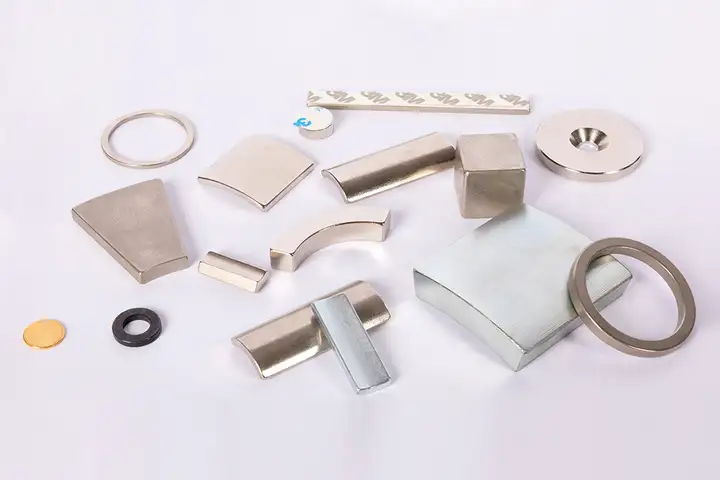
Second, NdFeB motor magnet
NdFeB permanent magnets are the most commonly used magnets in traction motors for hybrid and electric vehicles. High-energy NdFeB magnets make motors as small, lightweight, compact and efficient as possible.
Operating temperature influence
Compared with other permanent magnets, NdFeB magnets have poor temperature resistance. Because neodymium magnets have a negative coefficient, their coercivity and magnetic energy density (BHmax) decrease with temperature. Their maximum operating temperature ranges from 60°C to 220°C, and the Curie temperature ranges from 310-370°C. However, they can be supplemented with dysprosium (Dy) or terbium (TB) to suppress performance degradation caused by temperature changes. But this makes magnets more expensive.
Traction motors for hybrid and electric vehicles, railway vehicles, and motors for industrial equipment operate at relatively high temperatures. Therefore, high-temperature resistant neodymium magnets are often used in these applications.
Corrosion problems
Without coating protection, neodymium magnets have poor corrosion resistance. At the same time, they can also corrode from the inside out if the proper pretreatment process is not followed. Typically, multilayer nickel-copper-nickel plating is applied. However, for motor applications, epoxy resin and zinc coatings are used more. What's more, another new surface treatment, Everlube, can also be used in environments with high humidity and salt spray resistance.
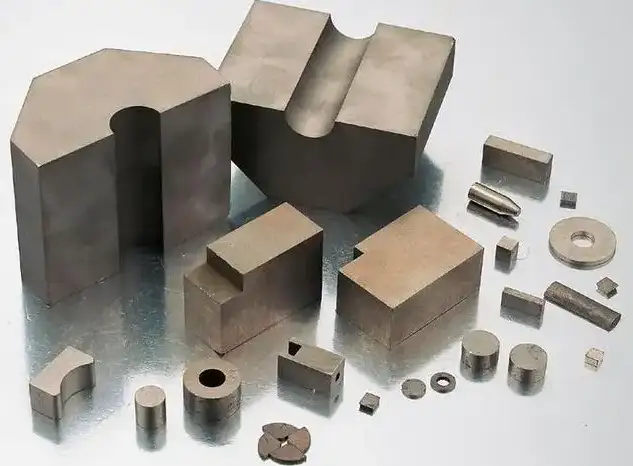
Third, samarium cobalt motor magnet
Samarium cobalt magnet is a rare earth permanent magnet that is fragile and prone to cracking and chipping. They have two "series", SmCo5 magnets and Sm2Co17 magnets.
Good temperature stability
At typical operating temperatures, samarium cobalt magnets are more magnetic than the strongest heat-resistant neodymium magnets currently used in motors. Maximum operating temperature range of 250 to 350°C; The Curie temperature range is 700 to 800 °C.
Strong corrosion resistance and oxidation resistance
Samarium cobalt magnets have excellent corrosion resistance (neodymium magnets do not). Most applications do not require electroplating or surface coating, which makes them also beneficial for medical applications.
Wide range of supply sources
Unlike neodymium magnets, which require large amounts of rare dysprosium (Dy) to function at moderate temperatures, samarium cobalt magnets use a wider range of materials and are inherently stable at temperatures well above the Curie point of sintered NdFeB magnets. This makes samarium cobalt magnet pricing more stable and less susceptible to market changes.
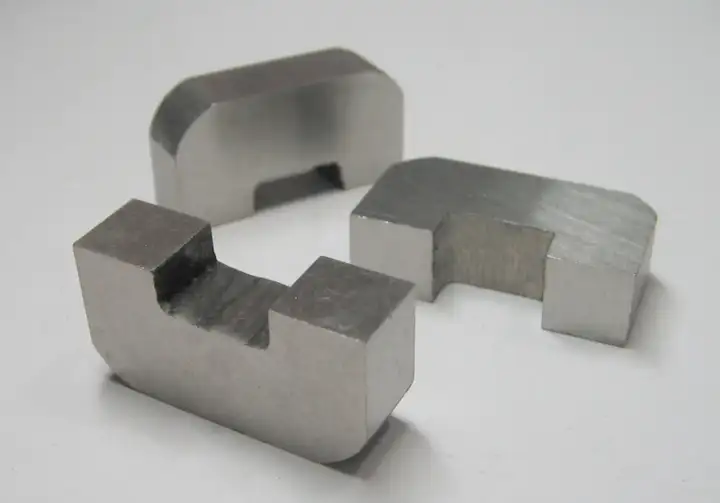
Fourth, Alnico motor magnet
Alnico permanent magnet material is the earliest widely used permanent magnet material, and its preparation process and technology are relatively mature. The Curie temperature is the highest among the current permanent magnet materials; It is characterized by the advantages of Alnico magnets are high residual magnetism (up to 1.35T) and low temperature coefficient. When the temperature coefficient is -0.02%/°C, the maximum use temperature can reach about 520°C. The disadvantage is that the coercivity is very low (usually less than 160kA/m), and the demagnetization curve is nonlinear, so the Alnico magnet is easy to be magnetized and easy to demagnetize.
Strong corrosion resistance and oxidation resistance
Alnico has strong resistance to rust and does not require electroplating on the surface.
At present, there are four main types of commercial magnets: NdFeB (NdFeB), samarium cobalt (SmCo), Alnico (AlNiCo) and ferrite (Ferrite). Among them, ferrites, rare earth samarium cobalt and neodymium magnets can be used in permanent magnet motor and automotive magnet applications.
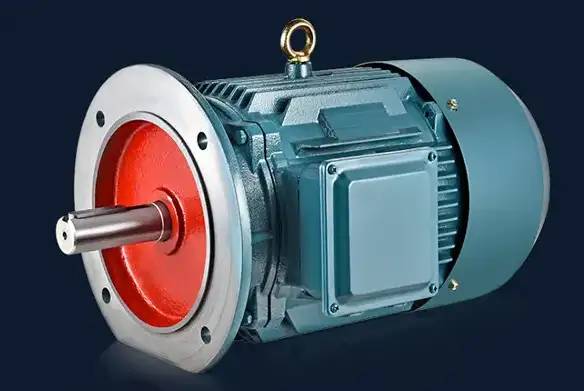
When designing a motor, the choice of magnet has a significant impact on the overall performance of the motor and the cost of the project. So you need to choose the right magnet for the motor, welcome to choose QCM magnet, our magnet can provide customization, will definitely be able to meet your diverse needs, welcome to choose and send inquiry.


