


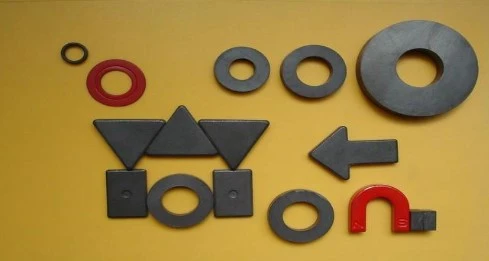
Magnets have a wide range of applications in our lives. From household appliances to industry, magnets play a role in making our lives easier and more efficient.
Some of the major uses of magnets include:
Computers and electronics
Magnets are found in computers and electronic devices and help in data storage on hard disks. They store data by magnetizing microscopic areas on the surface of the disk. Data is stored in a magnetic pattern that represents binary information (0s and 1s). The read/write head generates a magnetic field to align the magnetic domains, resulting in high capacity and fast data access. Magnets are also found in small speakers, USB cables, radios, televisions, and other electronic devices used every day. In speakers, electromagnets interact with permanent magnets to create vibrations that convert electrical energy into sound waves. Conversely, microphones use magnets to convert sound waves into electrical signals. Magnetic information storage technology has been in development for a century, through sound recording, image recording, and data recording. Important technological advances include magnetic tape, ring heads, thin-film heads, magnetoresistive and giant magnetoresistive read heads. The development of the magnetic information storage industry is the result of a multidisciplinary effort in which applied magnetism plays a central role. Floppy disks and hard disks have now replaced magnetic tapes as the new carriers for recording sound and images. Magnetic information storage is used in computer hard disks, floppy drives, magnetic core memory for computers, hotel access cards, meal cards, and so on.
Power and Industry
In industry, magnets are indispensable for converting mechanical energy into electrical energy using generators. Electromagnets play an important role in recycling by grabbing large pieces of metal. Large industrial magnets, often with rubber coatings, are used in scrap yards and recycling centers to lift and carry heavy metal objects. Magnetic drums are also used in mines to separate metal ores from crushed rock. Food processing plants also use magnets to remove small metal pieces from grains and other food products. Recycling facilities use magnets to separate ferrous metals (such as iron and steel) from nonferrous metals and other materials.
Health and Medicine
Magnets have important applications in the medical field. Magnetic resonance imaging (MRI) machines use powerful magnets to create detailed images of the body's internal structures for diagnostic purposes. They are also used in cancer treatment, where the magnetically sensitive fluid and heat generated by strong magnets help destroy cancer cells without harming healthy organs. Magnets are used in various medical devices such as pacemakers and hearing aids. In pacemakers, magnets help adjust settings. Magnets in hearing aids help to discreetly adjust volume and settings. The use of magnetic fields as an intervention in healthcare, commonly known as "magnetic therapy", has a long but controversial history. In recent years, a growing body of experimental evidence has shown that health interventions based on steady-state magnetic fields also have promising applications. The effects of steady-state magnetic fields on blood flow, bones and pain are being studied. Several studies have shown that steady-state magnetic fields can improve osteoporosis, promote fracture healing and bone defect repair, and alleviate osteoarthritis. Many human studies and animal studies have shown the pain-relieving effects of steady-state magnetic fields. The effect of steady-state magnetic fields on pain relief is related to magnetic field strength, duration of treatment, and type of pain. Transcranial magnetic stimulation (TMS), the use of pulsed magnetic fields applied to the central nervous system, has been approved for the treatment of a wide range of conditions. Magnetosurgery, the application of magnetic fields to a variety of surgical procedures, has also shown significant benefits.
Household Appliances
Magnets in household appliances serve a variety of purposes. Refrigerators utilize magnets to seal the door and effectively keep temperatures low. Vacuum cleaners and blenders utilize magnets for motor function or rely on magnetic components to operate. Credit cards, on the other hand, utilize magnetism to encode data securely. Magnets are also found in the mechanics of doorbells and telephones. Cabinet door locks utilize magnetism to keep doors securely closed. Magnetic locks are advanced locking mechanisms that utilize electromagnetic force to create a strong bond between the door and the frame. Magnetic sensors are essential components of alarm systems that detect when a door or window is open. Electric toothbrushes use magnetic induction for wireless charging. Magnets are also included in boxes and accessories for cell phones and tablets.
Education and Science Experiments
Magnets play an important role in educational settings. Magnets are used to demonstrate the principles of magnetism, to attract or repel objects, and to study magnetic fields. From simple experiments using iron filings to complex settings, magnets provide hands-on learning opportunities for students of all ages. Magnets can be used to attract paper clips or to make a compass from a magnetic needle floating on water. Exploring how different materials are affected by magnets or making a simple electromagnet are also engaging experiments. Magnetic blocks and science kits help children understand magnetism and foster creativity. Magnets are used in scientific instruments such as particle gas pedals and nuclear fusion experiments.
Arts & Crafts
In addition to their functional applications, magnets also have artistic uses. Many artists and craft enthusiasts incorporate magnets into their creations, making them interactive artworks, movable parts, or convenient display options.
Transportation and Vehicles
In transportation, maglev trains use magnetism to keep trains suspended above tracks. Magnets play a vital role in the automotive industry, helping to improve the efficiency and performance of both conventional and electric vehicles. They are an integral part of the motors in hybrid and electric vehicles. Magnets are also widely used in sensors that help monitor and control various vehicle functions, as well as charging systems. Magnetic fasteners are a newer automotive application that add flexibility and efficiency.
Office and School Supplies
Magnets are used to attach markers, erasers, and other accessories to magnetic white and blackboards. Magnetic clips and holders keep papers and documents organized and easily accessible on metal surfaces. Magnetic letters, numbers, and shapes are popular educational tools for children.
Navigation
(Historical Application) The ancients discovered long ago that magnets can be used to point directions. The ancient Chinese used natural magnets to make Si Nan or friction magnetization to make compasses. The invention of the compass promoted the development of navigation technology and gradually spread to all parts of the world.
Other Applications and Products
Magnets are used in magnetic accessories, packaging boxes, leather products and other fields. There are various shapes and properties of magnets available in the market, such as square magnets, cylindrical magnets, ring magnets, disk magnets, bar magnets, tile magnets, shaped magnets, magnetic frame magnets and so on. Neodymium magnets are also available in different grades and coatings. Magnetic solutions include Halbach arrays and magnetic couplings. Magnetic components include magnetic rods, drums, grate magnets, magnetic pulleys and pot magnets. Manufacturers offer a wide range of magnetic products such as rubber-coated neodymium magnets, permanent pot magnets, powerful fishing magnets, heavy-duty magnetic ceiling hooks, channel magnets, precast concrete form magnets, magnetic poster hooks, and more to replace traditional solutions for fastening, securing, and holding.
In short, magnets are indispensable every day, affecting everything from technology and industry to healthcare and education.


