


The primary use of magnetic filters is to remove magnetic contaminants from fluids (liquids, slurries, raw materials) or gases in industrial and commercial systems. These contaminants typically include magnetic sludge, iron oxides, or iron powder.
Magnetic filters have several main purposes and benefits:
PROTECT SYSTEM COMPONENTS: In heating and cooling systems, magnetic filters can separate magnetic sludge, specifically magnetite that forms when iron pipes begin to rust and become deprived of oxygen over time in closed loop systems. This black slime sticks to various parts of the system and can follow the fluid into heat exchangers and pumps, causing these components to become compromised or clogged. Magnetic filters protect boilers, heat exchangers, and pumps from damage and clogging by trapping these magnetic particles.
Improved system efficiency and performance: by removing contaminants such as magnetite circulating in the system, system components do not need to be overworked, helping central heating systems to run more efficiently.
Material purification and water quality improvement: Magnetic filters improve water quality by trapping magnetic particles in fluids or slurries. They can be used to clean oils, paints, clay slurries,s and other fluids or slurries containing fine iron contaminants. In the production of food, beverages, and resins, magnetic filters are used to remove foreign magnetic material and iron dust from raw materials. They are also used to purify paramagnetic particulate contaminants from chemicals, pharmaceuticals, and fluids.
MAINTENANCE BOILER WARRANTY: Many modern boilers have very narrow heat exchanger waterways that are more likely to become clogged. If the heat exchanger becomes clogged due to contamination of the system, this can void the boiler's warranty. Boiler manufacturers now often require some sort of magnetic filter to be fitted to the system to keep the heat exchanger clean.
CONTINUOUS PROTECTION: Once a magnetic filter is installed, it provides continuous protection to trap magnetite in the circulation.
INDUSTRIAL APPLICATIONS: Magnetic filters are also used in the production of food, beverages, resins, and other products to remove external magnetic materials from raw materials in order to prevent most of the iron powder and other external materials from flowing out.
Mineral Enrichment and Material Recovery: Magnetic separation is an effective means of enriching natural ores. It is used for mineral enrichment (beneficiation) and material purification. This involves separating and recovering minerals with different magnetic responsiveness from various ores. Magnetic separation is also used in waste treatment to recover stray iron and magnetic materials from slags, fuel ashes, and ore tailings.
simplifies system maintenance: Many canister magnetic filters can be easily isolated from the system. This makes it easy to add cleaners and protectants (corrosion inhibitors) to the system. Chemicals can be added through the filter after the bottom is drained. This also helps reduce maintenance calls and keeps the system clean.
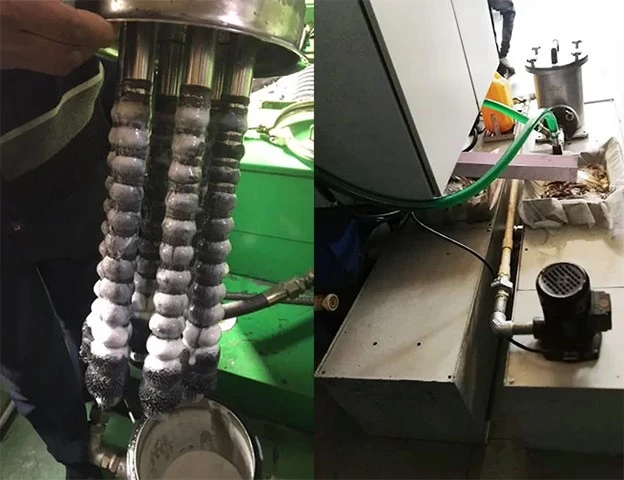
Handling different types of magnetic materials
Strongly magnetic materials: Conventional magnetic separation equipment is primarily used to separate strongly magnetic materials such as iron and magnetite. This usually involves removing "stray iron", i.e., coarse iron larger than 3 millimeters.
Weakly magnetic materials and fine particles: Recent developments such as the High Gradient Magnetic Separator (HGMS) have extended the range of applications for magnetic separation to include the separation of very weak paramagnetic materials and small particle sizes. These separators can remove particles in the micron range.
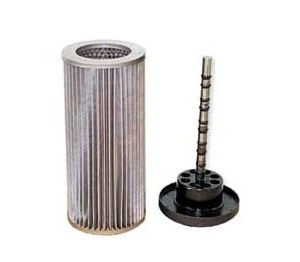
Special applications
Water Treatment: In water treatment, magnetic filtration directly removes suspended paramagnetic solids. Non-magnetic suspended solids and even dissolved solids can be removed by adding magnetic particles and chemically flocculating the contaminants with these magnetic "seed" particles, and then applying magnetic filtration to the resulting composite.
Biological applications: High Gradient Immunomagnetic Separation (HGIMS) utilizes immunomagnetic beads that bind to a target bacterium (e.g., Edwardsiella ictaluri), and then uses a magnetic field to separate the magnetic complex for bacterial detection and separation.
In summary, the core function of magnetic filters is to extract and remove magnetic material from fluids or gases using magnetic force to achieve specific goals of protecting equipment, purifying products, improving the environment, or recycling resources.


