


What is the cylindrical grinding process?
The cylindrical grinding process is a precision machining method that utilizes a high-speed rotating grinding wheel to cut the outer cylindrical surface of the workpiece. Through the relative motion between the grinding wheel and the workpiece, the excess material on the surface of the workpiece is removed to achieve precise dimensional accuracy, good shape accuracy and surface finish.
Why do magnets need a grinding process?
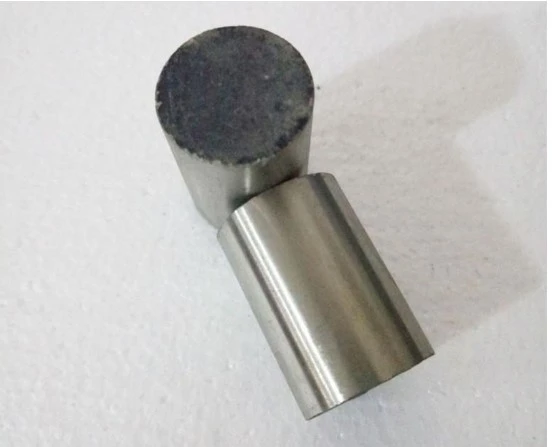
The reason why magnets need a grinding process is mainly that in the production process, just manufactured magnet blanks, such as cylindrical NdFeB blanks, the surface exists in the sintering and other pre-processes produced in the oxidized black skin, the size of the finished product often can not be accurate to meet the requirements. To meet the high precision dimensional requirements as well as the good appearance and performance of the finished magnet, it is necessary to carry out the grinding process.
What equipment is used in the cylindrical grinding process?
In the magnet cylindrical grinding process, the main equipment used is the cylindrical grinder, which is more common with ordinary cylindrical grinders and CNC cylindrical grinders. Ordinary cylindrical grinding machine operation is relatively flexible, suitable for small batch, diversified production needs; CNC cylindrical grinding machine with its high degree of automation, stable processing accuracy, suitable for high-volume, high-precision production tasks.
The magnet cylindrical grinding process mainly contains the following steps:
1. Rough grinding: the use of a larger particle-size grinding wheel, quickly removes most of the oxide black skin and excess material on the surface of the magnet blank, initially close to the size requirements of the finished product, laying the foundation for the subsequent fine grinding process.
2. Semi-fine grinding: use a slightly finer grinding wheel to further correct the size error and surface roughness after rough grinding, so that the size of the workpiece is closer to the finished product requirements, and at the same time improve the surface quality.
3. Fine grinding: use a finer grain size grinding wheel, by the customized requirements of the tolerance of the outer diameter of the finished magnet, fine grinding, to achieve precise dimensional accuracy and high surface finish, to meet the high precision requirements of the finished product.
To achieve the expected results and design requirements in the cylindrical grinding process, the following measures need to be taken:
1. Reasonable selection of grinding wheels: according to the material and hardness of the magnet and the processing requirements, select the grinding wheels with appropriate grain size, hardness and bonding agent. For example, for NdFeB magnets with high hardness, a slightly softer grinding wheel can be used to ensure grinding efficiency and surface quality.
2. Optimize the grinding parameters: accurately control the parameters of grinding speed, feed and grinding depth. Appropriately reduce the grinding speed and feed, reduce the depth of grinding, can effectively reduce the grinding force and grinding heat, to avoid magnet surface burns and deformation, to ensure dimensional accuracy and surface quality.
3. Adequate cooling and lubrication: In the grinding process, use sufficient cooling and lubricating fluid to take away the heat generated by grinding, reduce the temperature of the workpiece and prevent thermal deformation; at the same time, the cooling and lubricating fluid can also play a role in cleaning the grinding wheel and workpiece surface abrasive debris, and improve the surface finish.
4. Regular grinding wheel dressing: With the grinding, the grinding wheel surface will gradually wear and clog, affecting the grinding effect. Therefore, it is necessary to regularly dress the grinding wheel to restore the sharpness and geometry of the grinding wheel to ensure stable grinding quality.
After completing the cylindrical grinding, the cylindrical magnet enters the next process, such as Magnetic Pole Beam Adhesive Processing, and then is ready for subsequent operations such as batch slicing.


