


Magnetic welding clamps are specialized tools used in metal fabrication and welding to hold workpieces securely in place. But do they work? The short answer is yes-when used correctly and in the right applications. This article breaks down how magnetic welding clamps function, their pros and cons, and how to choose the best ones for your projects.
What Are Magnetic Welding Clamps?
Magnetic welding clamps are devices that use magnetic force to temporarily fix metal pieces during welding, cutting, or assembly. They replace traditional mechanical clamps, screws, or fixtures, offering a faster way to position materials. Most models feature adjustable angles (e.g., 45°, 90°, or 135°) to accommodate complex joints or shapes.
Key Components:
Magnetic base: Generates the holding force.
Adjustable arms/angles: Allow precise alignment.
On/off switch (for electromagnetic models): Controls magnetic activation.
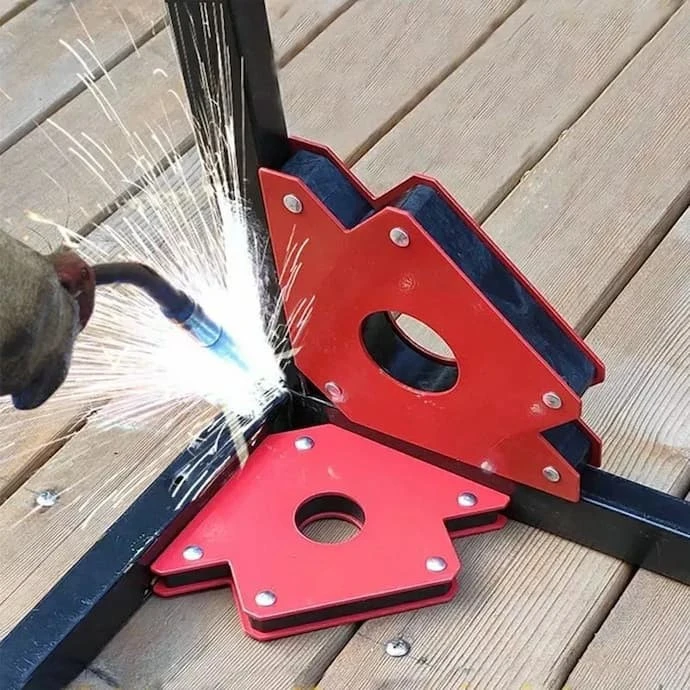
How Do They Work?
Magnetic clamps rely on ferromagnetism-the attraction between magnets and ferrous metals like steel or iron. Two primary types exist:
1. Permanent Magnet Clamps:
○ Use fixed magnets (e.g., neodymium) to create a constant magnetic field.
○ No external power is required.
○ Ideal for quick setups and outdoor use.
2. Electromagnetic Clamps:
○ Require electricity to generate a magnetic field.
○ Offer stronger, adjustable holding power.
○ Safer for delicate work (magnets deactivate when power is off).
The magnetic force holds metal pieces tightly, reducing shifts or gaps during welding. This ensures cleaner, more accurate joints.
Advantages of Magnetic Welding Clamps
1. Speed and Efficiency
Traditional clamps require manual tightening, while magnetic versions attach instantly. This saves time in repetitive tasks or large projects.
2. Precision Alignment
Adjustable angles help position odd-shaped or bulky materials (e.g., pipes, beams) without extra tools.
3. Versatility
Suitable for T-joints, corner welds, and overlapping plates. Some clamps even work on curved surfaces.
4. Reduced Material Damage
Unlike mechanical clamps, magnets don't leave scratches or dents on finished surfaces.
5. Portability
Permanent magnet clamps are lightweight and require no cables, making them ideal for fieldwork.
Limitations to Consider
1. Material Restrictions
Only effective on ferrous metals (steel, iron). Non-magnetic materials like aluminium, copper, or stainless steel won't work.
2. Heat Sensitivity
Permanent magnets can lose strength if exposed to high temperatures (>150°F/65°C) during welding. Electromagnetic models avoid this issue.
3. Weight Capacity
Heavy or thick materials may exceed a clamp's holding force. Always check the product's weight rating.
4. Cost
Electromagnetic clamps are pricier than permanent ones due to their complex design.
Common Applications
Magnetic welding clamps are widely used in:
● Construction: Assembling steel frames, beams, or pipelines.
● Automotive repair: Fixing exhaust systems or body panels.
● Manufacturing: Jig setups for machinery parts.
● DIY projects: Home metalwork or art installations.
Choosing the Right Magnetic Clamp
Follow these steps to pick the best tool for your needs:
1. Material Type: Confirm your workpiece is magnetic.
2. Project Size: Match the clamp's holding force (measured in pounds/kg) to the material's weight.
3. Temperature Needs: For high-heat tasks, opt for electromagnetic clamps.
4. Mobility: Permanent magnets suit outdoor jobs; electromagnets work better in workshops.
5. Budget: Permanent magnets are cheaper upfront; electromagnets offer long-term flexibility.
Pro Tip: Look for clamps with angled guides or quick-release switches for smoother workflows.
Do They Work? The Verdict
Magnetic welding clamps are highly effective when used within their limits. They excel in speeding up setups, improving weld accuracy, and handling complex angles. However, they're not a universal solution-avoid them for non-ferrous metals or extreme heat environments.
For businesses, investing in quality magnetic clamps can reduce labor costs and minimize errors. For hobbyists, they offer a user-friendly alternative to traditional clamping methods.
By understanding their strengths and weaknesses, you can leverage magnetic welding clamps to achieve professional results safely and efficiently.


