


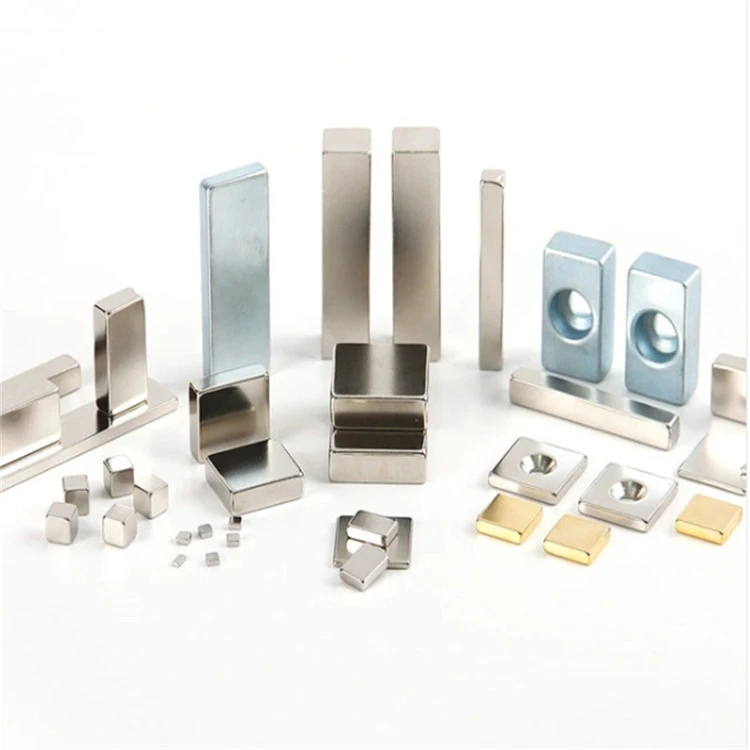
Magnets are essential components in countless devices, from electric motors to medical equipment. But how are they manufactured? This article breaks down the science and engineering behind magnet production, focusing on common types like samarium-cobalt (SmCo) and neodymium-iron-boron (Neo) magnets. Let's explore the process, from raw materials to quality checks.
1. The Basics of Magnet Manufacturing
Magnets are made from ferromagnetic materials-substances that can retain a magnetic field after being exposed to one. The manufacturing process typically involves four stages:
1. Raw Material Preparation: Metals like iron, nickel, cobalt, or rare-earth elements (neodymium, samarium) are purified and alloyed.
2. Shaping: The material is formed into a rough shape using methods like casting, sintering, or injection molding.
3. Finishing: The magnet is cut, ground, or coated to meet precise specifications.
4. Magnetization: The shaped material is exposed to a strong magnetic field to align its atomic structure.
Different magnet types require unique approaches. Below, we'll dive into SmCo and Neodymium magnets.
2. SmCo vs. Neo Magnets: How Are They Made?
Samarium-Cobalt (SmCo) Magnets
SmCo magnets are known for high-temperature resistance and durability. Their production involves:
● Powder Metallurgy: Samarium and cobalt are melted, rapidly cooled, and crushed into fine powder.
● Pressing: The powder is compacted in a mold under high pressure.
● Sintering: The pressed material is heated in a vacuum furnace to fuse particles without melting.
● Heat Treatment: The magnet is cooled slowly to optimize its magnetic properties.
Neodymium-Iron-Boron (Neo) Magnets
Neodymium magnets are the strongest permanent magnets available. Their process includes:
● Alloying: Neodymium, iron, and boron are melted and formed into flakes.
● Jet Milling: The flakes are ground into nanoparticles.
● Pressing and Sintering: Similar to SmCo, but performed in a magnetic field to align particles.
● Machining: Sintered blocks are cut into final shapes with diamond-tipped tools.
3. Finishing Methods: Precision Matters
After shaping, magnets undergo finishing to meet exact size and surface requirements:
● Cutting: Wire electrical discharge machining (EDM) or slicing with diamond blades.
● Grinding: Surfaces are smoothed using abrasive wheels.
● Coating: To prevent corrosion (especially for Neodymium magnets), layers like nickel, zinc, or epoxy are applied.
4. Magnetization: The Final Spark
Raw magnets are not initially magnetic. They gain their strength by being placed inside a pulsed magnetizing fixture-a coil generating a brief, ultra-strong magnetic field (up to 30,000 Oersteds). This aligns the material's domains, creating a permanent magnet.
5. Why Coating Is Critical
Most magnets corrode when exposed to moisture or chemicals. For example:
● Neodymium Magnets: Require nickel, zinc, or gold plating.
● SmCo Magnets: Often coated with epoxy or Parylene for high-temperature protection.
A poor coating can lead to performance degradation or safety risks.
6. Stabilization and Calibration
Before delivery, magnets undergo quality checks:
● Aging: Magnets are heated or exposed to minor demagnetizing fields to ensure stability.
● Testing: Magnetic strength is measured using a Gauss meter or Hall-effect sensor.
● Calibration: Adjustments are made to meet customer specifications (e.g., field strength, orientation).
7. What Defines a Quality Magnet?
A qualified magnet must pass these criteria:
1. Magnetic Strength: Matches the grade (e.g., N52 for Neodymium magnets).
2. Dimensional Accuracy: Tolerances within ±0.1 mm.
3. Coating Integrity: No cracks or bubbles under microscopic inspection.
4. Temperature Resistance: Performs within specs under rated temperatures.
5. Consistency: Uniform properties across batches.
Conclusion
From alloy preparation to final calibration, magnet manufacturing blends advanced materials science and precision engineering. Understanding these steps helps buyers choose the right magnet for their needs-whether it's a heat-resistant SmCo for aerospace or a powerful Neodymium magnet for electric vehicles. By prioritizing quality control and proper coatings, manufacturers ensure magnets deliver reliable, long-lasting performance.


