


At the end of Tesla's Gigafactory lithium battery production line, a set of silver-gray equipment precisely sorts electrode materials at 0.1-second intervals - these are high-gradient magnetic separators equipped with neodymium iron boron (NdFeB) permanent magnets. As the "invisible guardian" of modern industry, magnetic separation technology has evolved from traditional iron ore processing to cutting-edge applications in new energy and e-waste recycling. This article provides an in-depth technical analysis of its working principles and innovative implementations.
Core Component Technology Breakdown
Magnetic System Innovations
Rare Earth Magnet Matrix: Utilizes N52SH-grade NdFeB blocks achieving 1.4-1.6T surface flux density, 5x stronger than conventional ferrite magnets.
Electro-permanent Hybrid Systems: Integrates water-cooled electromagnetic coils in dry separators for 0-2.0T step-less adjustment.
Halbach Array Configuration: Creates unilateral strong fields through optimized pole arrangements, reducing energy consumption by 40%.
Intelligent Sorting Systems
Multi-spectral Sensor Fusion: Combines X-ray transmission (XRT) with eddy current detection for precise non-ferrous metal identification.
Pneumatic Ejection Modules: Features 1024-channel piezoelectric nozzles with ±2mm particle size recognition accuracy.
Industry 4.0 Integration: Supports OPC UA protocol for real-time monitoring of 18 operational parameters including energy consumption per ton.
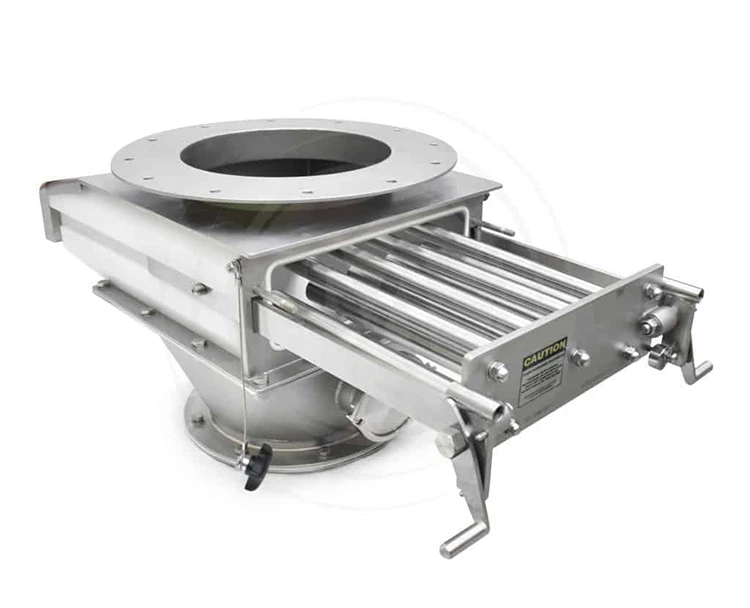
Magnetic Drawer Separator
Advanced Separation Technologies Comparison
|
Type |
Application Scenario |
Key Technical Specs |
Innovation Case Study |
|
Vertical Ring Pulsating HGMS |
Fine-grained hematite (<0.045mm) |
1.8T background field, 50Hz pulsation |
Pangang Group processes 20M tons/year of vanadium-titanium ore |
|
Superconducting Separators |
Li-battery black mass recovery |
5T magnetic field, liquid helium cooling |
CATL achieves a 98% metal recovery rate (2023) |
|
Eddy Current Roll Separators |
PCB waste processing |
Variable rotation 200-3000rpm |
GEM Co. reaches 5t/h e-waste capacity |
|
Pipeline Magnetic Traps |
Food-grade calcium carbonate |
304 stainless steel, IP69K rating |
Mengniu Dairy maintains ≤0.5ppm metal detection |
Industry-specific Solutions
Mining Challenges
Hard Rock Crushing: South African platinum mines use dual-drum dry separators for pre-concentration, reducing grinding energy by 30%.
Tailings Reprocessing: Ansteel Group's SLon-2500 VPHGMS extracts 65% Fe concentrate from 15% Fe tailings.
New Energy Applications
Battery Recycling: BHS-Sonthofen's magneto-electric system separates copper/aluminium foils from active materials.
Solar Silicon Purification: LONGi's magnetic fluid separation controls metallic impurities at 0.1ppb level.
Food Safety Assurance
Flour Processing: Bühler's self-cleaning magnetic grids provide dual protection with metal detectors.
Edible Oil Refining: Closed-system magnetic pipes prevent oxidation, compliant with FDA standards.
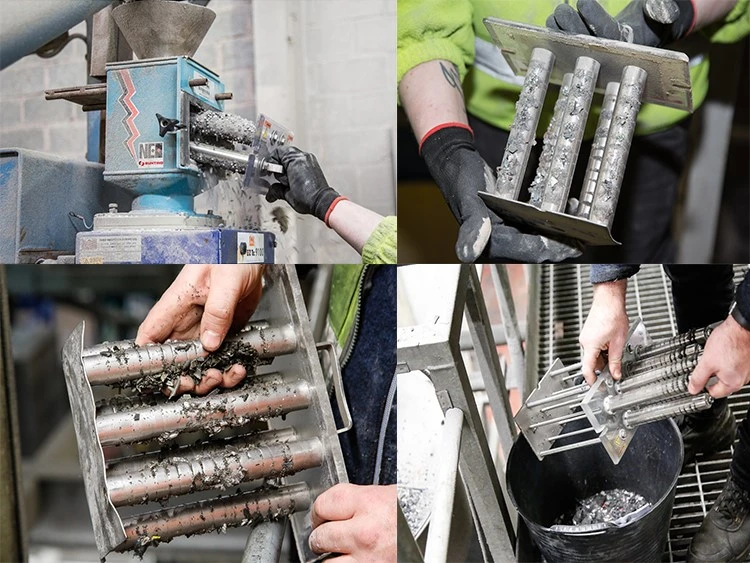
Quick Clean Drawer Magnet
Technological Evolution Trends
Advanced Permanent Magnets
Xiamen Tungsten's samarium cobalt magnets show <3% flux loss at 200°C, deployed in Saudi oilfield drilling systems.
Smart Maintenance Solutions
Siemens' MindSphere platform enables 7-day advance bearing failure alerts through vibration analysis.
Sustainable Innovations
China Heavy Machinery's dry process technology achieves 100% water saving, listed in the National Energy-saving Catalog.
Market Insights
Allied Market Research projects a 6.8% CAGR growth for global magnetic separation equipment (2023-2030), with lithium battery recycling demand surging at 23.4%. Notably, AI-powered magnetic robots featuring machine vision-guided dynamic field adjustment won the 2023 Hermes Award, boosting complex material sorting efficiency by 170%.
Your latest smartphone contains approximately 18 magnetically purified components - from vibration motor neodymium powder to recycled circuit board copper. This stands as a testament to the silent revolution in magnetic separation technology.


