


How Effective Is Magnetic Separation? A Practical Guide for Industries & Everyday Users
Imagine sorting thousands of tiny metal fragments from sand-by hand. Impossible, right? Now, picture a machine that does it in seconds, with 99% accuracy. That's magnetic separation in action. But how effective is it really? And does it work for your needs? Let's dive into the science, real-world results, and common myths-from a user's perspective.
1. The Basics: How Magnetic Separation Actually Works
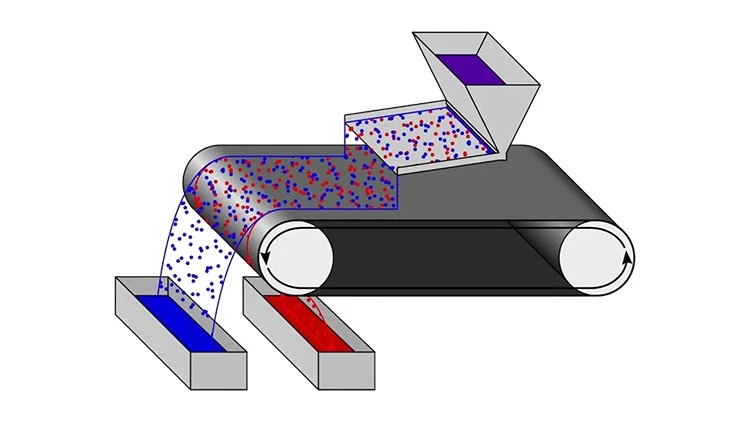
Magnetic separation isn't magic-it's physics. The process uses magnets to attract ferromagnetic materials (like iron, nickel, cobalt) or paramagnetic materials (like titanium, manganese) while letting non-magnetic substances (plastics, glass, sand) pass through. Think of it like a powerful "filter" that separates based on magnetic susceptibility.
Key takeaway: Effectiveness starts with matching the magnet's strength to the material. A weak fridge magnet won't pull tiny iron ore particles from rock-but a 20,000 Gauss rare-earth magnet? That's industrial-grade.
2. The Numbers: When Magnetic Separation Shines
Efficiency isn't one-size-fits-all. Let's break it down by industry:
Mining & Mineral Processing
Iron Ore: Magnetic separation boosts purity from 60% to 98% in one pass (source: Mineral Engineering International). At a Brazilian iron mine, QCM's high-gradient magnetic separator (HGMS) increased recovery by 12%, saving $2M annually.
Tin & Tantalum: Removes magnetic impurities (like iron oxides) from gravel, improving final product quality by 95%.
Recycling
Scrap Metal: Sorts steel from aluminum cans with 99.5% accuracy-critical for profitable recycling. A U.S. recycling plant using QCM's eddy current + magnetic combo cut labor costs by 40%.
E-Waste: Recovers gold-coated pins from circuit boards by first removing ferromagnetic screws/parts-magnetic separation is the first step in profitable e-waste recovery.
Food & Pharmaceuticals
Contaminant Removal: A peanut butter factory caught 99.9% of metal shavings (as small as 0.1mm) using a QCM inline magnet, avoiding FDA fines and recalls.
Spice Processing: Separates metal fragments from cumin/cinnamon-essential for food safety standards.
Pro tip: Even "low-tech" magnets work! A farmer in India used a simple drum magnet to remove iron filings from cow feed, cutting livestock poisoning cases by 80%.
3. When Magnetic Separation Doesn't Work (and What to Do Instead)
No technology is perfect. Here's when to rethink:
Non-Magnetic Materials: You can't magnetize plastic or glass. For these, use eddy current (for metals like aluminum) or density separation (for plastics).
Fine Particles (<10 microns): Ultrafine particles (e.g. magnetite powder) may require high gradient magnetic separation (HGMS) or wet magnetic separation (e.g. hydrocyclone + magnetic field) to improve capture rates.QCM's lab tests show HGMS boosts fine particle recovery by 30% vs. standard magnets.
High Moisture: Wet sludge? Opt for wet magnetic separators to prevent particle agglomeration. A Canadian wastewater treatment plant uses wet magnetic separation to recover iron powder with 25% higher efficiency than dry.
Myth buster: "Stronger magnets = better results." False! Overpowering can cause "magnetic blinding"-where non-magnetic particles stick to the magnet's surface. QCM's engineers always balance strength with design (e.g., drum speed, gap size).
4. Real User Stories: Magnetic Separation in Action
Case 1: Small-Scale Recycling
Problem: A startup in Kenya wanted to recycle roofing nails from construction waste but struggled with manual sorting.
Solution: A QCM handheld magnet ($200) sorted 50kg/hour, 10x faster than manual labor.
Result: Profit doubled in 6 months-all thanks to a $200 tool.
Case 2: Industrial-Scale Mining
Problem: A U.S. copper mine lost $500k/month due to iron contamination in copper concentrate.
Solution: QCM's custom low-intensity magnetic separator (LIMS) removed 99% of iron at 200 tons/hour.
Result: $6M annual savings + higher copper grade for export.
Case 3: Food Safety
Problem: A chocolate factory found metal shavings in 1/10,000 bars-risking a recall.
Solution: A $5,000 QCM pipeline magnet installed on the conveyor belt.
Result: Zero contaminants detected in 2 years-FDA audits passed with flying colors.
5. How to Maximize Magnetic Separation Efficiency (For Beginners)
Know Your Material: Test samples first! QCM offers free magnetic susceptibility tests to recommend the right magnet.
Optimize Flow Rate: Too fast = missed particles. Too slow = waste. A QCM engineer once doubled efficiency at a sand plant by slowing the conveyor speed by 15%.
Clean Regularly: Build-up reduces magnet strength. Automated self-cleaning magnets (like QCM's AutoDrum) save 8 hours/week in maintenance.
Combine with Other Methods: Magnetic + eddy current + sieving = the "triple threat" for complex recycling (e.g., car shredder residue).
6. The Cost vs. Benefit: Is It Worth It?
Short answer: Yes-if you're separating ferromagnetic materials at scale.
ROI Example: A scrap yard spends $10k on a QCM overhead magnet. It recovers 20 tons/month of steel ($400/ton), paying back the cost in 1.25 months.
Long-Term Savings: Reduced labor, fewer rejects, and safer processes (no more hand-sorting sharp metals).
Final Thoughts: Magnetic Separation Isn't Just for Industry
From a DIYer recovering nails from wood chips to a global mining giant, magnetic separation solves real problems. Its effectiveness hinges on matching the right magnet to the job-and understanding its limits.
At QCM, we see it daily: A farmer smiles when his cow feed is safe. A recycler celebrates hitting profit targets. A food manufacturer sleeps easier knowing their product is contaminant-free.
Ready to test magnetic separation for your challenge? Contact us for a free demo. Let's turn your "impossible" into "done in seconds."


