


Why NdFeB Quality Control Matters
Neodymium Iron Boron (NdFeB) magnets power everything from electric vehicles to MRI machines. However, a 2023 study found that 18% of industrial magnet failures stem from poor quality control (Journal of Advanced Materials). For B2B buyers, rigorous quality checks mean:
• 30% longer service life in high-stress applications
• Reduced warranty claims – Defective magnets cost manufacturers $2.1B annually (IMFA Report 2024)
• Compliance with ISO 9001 and IATF 16949 (automotive standards)
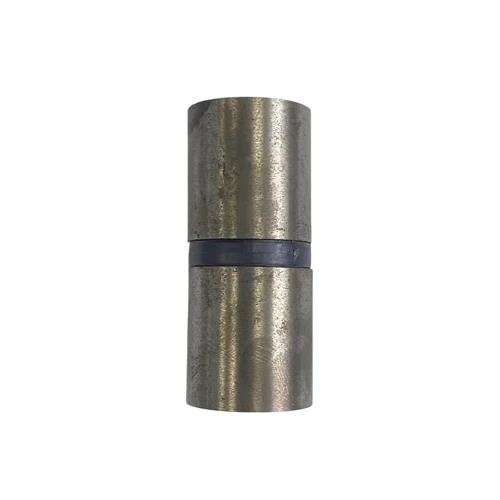
Phase 1: Raw Material Control – The Foundation
Critical Factors:
✅ Grade Selection
• N35 to N55: Standard grades for industrial motors
• EH, SH, UH series: High-temperature grades (e.g., N38SH for 150°C environments)
• Ask for Mill Test Reports – Verify rare earth composition (Nd ≥ 29%, Dy/Tb if added)
✅ Supplier Audits
• Demand IEC 60404-8-1 certification for raw alloy
• Check for vacuum melting vs. strip casting (superior microstructure)
❌ Red Flag: Suppliers offering "N52-grade" at N35 prices – likely recycled/scrap material.
Phase 2: Manufacturing Process Checks
A. Sintering & Heat Treatment
|
Parameter |
Optimal Range |
Testing Method |
|
Sintering Temp |
1080–1120°C |
Pyrometer + ISO 4499-2 |
|
Oxygen Content |
<500 ppm |
Inert gas analysis |
|
Coercivity (HcJ) |
≥12 kOe (for automotive) |
Permeameter (ASTM A977) |
Pro Tip: Request lot-specific hysteresis curves – slope indicates consistency.
B. Machining & Tolerance Control
• Laser cutting vs. wire EDM: ±0.05 mm vs. ±0.15 mm tolerance
• Critical dimensions (e.g., rotor slots): Use 3D optical profilometry (not just callipers)
• Edge chamfering: ≥0.1 mm radius (prevents coating cracks)
Phase 3: Coating Quality – Your First Defense
Plating Standards by Industry:
|
Application |
Coating |
Thickness |
Test Standard |
|
Automotive |
Ni-Cu-Ni |
15–25 µm |
ASTM B117 (720h salt spray) |
|
Medical |
Epoxy + Au |
30–50 µm |
ISO 13485 biocompatibility |
|
Marine |
Aluminized |
20–30 µm |
ISO 9227 C5-M corrosion |
4-Step Coating Inspection:
1. Adhesion Test: Cross-cut tape method (ASTM D3359) – ≥4B rating required
2. Porosity Check: Ferroxyl test – no blue spots in 30 minutes
3. Thickness: X-ray fluorescence (XRF) – ±2 µm variance allowed
4. Visual: 10x magnifier – reject parts with >3 pinholes/cm²
Phase 4: Final Performance Validation
A. Magnetic Properties
• Surface Gauss: Use a transverse Hall probe (not contact-based)
• Flux Density (Br): ±3% of spec (e.g., 14.8 kg for N52)
• Demagnetization Test: Apply reverse field at max operating temp
B. Destructive Testing (Sample Basis)
• Impact Resistance: 500g weight drop from 30 cm (no cracks)
• Thermal Cycling: -40°C ↔ +200°C for 50 cycles (≤5% flux loss)
The 7-Question Supplier Checklist
1. Can you provide third-party ICP-MS reports for raw materials?
2. Do you use closed-loop hydrogen decrepitation? (Reduces oxidation)
3. What's your batch-to-batch Br variance? (Should be ≤1.5%)
4. How do you handle demagnetized edges after machining?
5. Is passivation included post-plating? (Essential for salt environments)
6. What's your rework policy for out-of-tolerance parts?
7. Can you supply magnetized in custom orientations? (Radial/axial)
Cost vs. Quality Balance Sheet
|
Cheap Magnets |
Premium Magnets |
|
Recycled NdFeB |
Virgin rare earths |
|
Manual demagnetization |
Controlled slow cooling |
|
Single Ni coating |
Ni+Epoxy multilayer |
|
1-year warranty |
5-year pro-rated |
|
$0.18/g (N35) |
$0.32/g (N52SH) |
Source: 2024 Global Magnet Pricing Index
When to Walk Away
• Suppliers who refuse factory audits
• No ISO 9001 or RoHS/REACH documentation
• "One-size-fits-all" coating claims
• 2-week lead time for test reports
Final Thought: Quality NdFeB isn't a commodity – it's engineered. Partner with suppliers who treat magnets as precision components, not bulk material.


