


Magnetization of a permanent magnetic lifter is achieved through a mechanical or manual operation. For example, by rotating a specifically designed handle or operating a lever, the internal magnetic fields within the lifter are aligned. This alignment process strengthens the magnetic force, enabling the lifter to firmly grasp ferromagnetic materials. Once the operation is complete, the lifter is magnetized and ready for use.
Permanent magnetic lifters are indispensable tools in a wide range of industrial scenarios, prominently in warehouses, factory workshops, and freight yards. They are engineered to function in combination with diverse lifting equipment, facilitating the seamless handling of ferromagnetic materials and workpieces. Their widespread application can be attributed to a suite of remarkable characteristics.
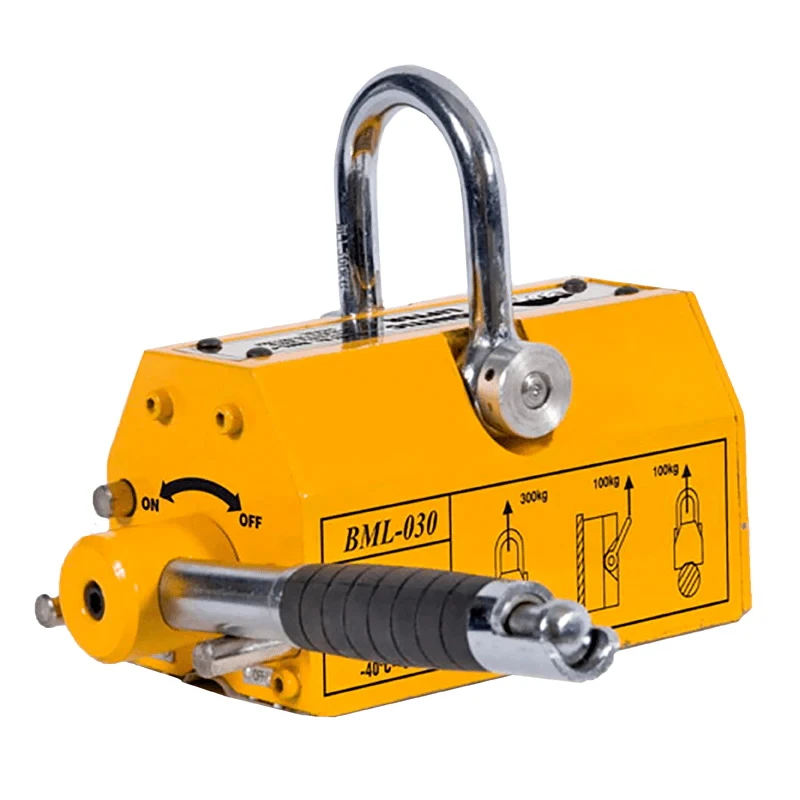
Key Features and Applications
Lightweight and User - Friendly Design
One of the most striking features of permanent magnetic lifters is their lightweight construction. This not only makes them effortless to maneuver but also alleviates the overall burden on the lifting equipment. For instance, in a bustling factory workshop where the rapid movement of materials is of the essence, the portability of the permanent magnetic lifter enables swifter operations. Additionally, they are remarkably easy to operate. Workers with minimal prior experience can quickly master their usage, significantly enhancing work efficiency.
High - Frequency Operation
Permanent magnetic lifters are well - equipped for high - frequency operation. This implies that they can be repeatedly utilized within a short time frame, making them highly suitable for continuous production lines. In a steel manufacturing facility, for example, the ability to swiftly lift and transfer steel plates from one workstation to another is crucial for maintaining an uninterrupted production flow.
Temperature - Resistant and Self - Transferable
These lifters are capable of handling ferromagnetic materials with a magnetic permeability of non - metals within 200 °C. This temperature resistance is of utmost importance in industries where materials may be hot during the manufacturing process. Moreover, they can be transferred independently, further augmenting their versatility.
Demagnetization Process
The demagnetization of permanent magnetic lifters is as crucial as magnetization. To demagnetize the lifter, the operator reverses the mechanical or manual operation that was used for magnetization. This action disrupts the alignment of the internal magnetic fields, reducing the magnetic force to a level where the lifted object can be safely released.
During the magnetization and demagnetization processes, it's essential to visually inspect the mechanical parts of the lifter. Ensure that there are no signs of wear, damage, or misalignment, as these issues could affect the performance and safety of the lifter.
Safety Precautions Before Use
Before using a permanent magnetic lifter, several vital steps must be taken to ensure safe and efficient operation.
Surface Cleaning
Cleaning the surface of the steel plate is a fundamental step. Over time, steel plates can accumulate dust or develop rust. A layer of dust can create a barrier between the permanent magnetic lifter and the steel plate, diminishing the magnetic attraction. Rust, on the other hand, not only weakens the adsorption capacity but can also cause damage to the lifter's surface. Thus, using a wire brush or an appropriate cleaning agent to remove dust and rust is a necessary preliminary measure.
Weight Determination
Accurately determining the weight of the steel plate is equally important. Permanent magnetic lifters are available in various specifications, each with its own weight - handling capacity. By precisely measuring the weight of the steel plate, the operator can select the appropriate lifter. For larger steel plates, employing multiple permanent magnetic lifters in a well - distributed manner can ensure stability and prevent overloading. Overloading a permanent magnetic lifter can lead to the dropping of the load, posing serious safety risks and potentially causing damage to the equipment and materials.
Conclusion
Permanent magnetic lifters play a pivotal role in the industrial realm, particularly in material handling. By grasping their features, proper operation methods, and safety precautions, Users can optimize their efficiency and safety in diverse industrial applications. Whether in a steel mill, a construction site, or a manufacturing plant, adhering to these guidelines can help prevent accidents and ensure smooth operations, ultimately contributing to enhanced productivity and cost-effectiveness.


