


Introduction
Magnetic closures (often called magnetic snaps) are practical fastening solutions for textiles and accessories, offering seamless engagement compared to traditional mechanical snaps. Below is a scientifically accurate guide for creating safe, durable magnetic closures.
Unveiling the Realities of Magnetic Closures
1. Misconception Alert:
○ Magnetic closures ≠ standard snap buttons. Snap buttons mechanically interlock, while magnetic closures rely on magnetic attraction.
○ Safety Note: Loose magnets pose ingestion risks for children. Always encapsulate magnets in fabric or use child-safe, enclosed units.
2. Material Accuracy:
○ True magnetic closures require paired components: one with a magnet and a corresponding ferrous metal piece (or a second magnet with opposite polarity). Using two magnets without proper polarity alignment will cause repulsion.
3. Adhesive Limitations:
○ Glue-alone attachments fail under stress. Industrial magnetic closures combine epoxy adhesives with stitching or rivets for durability.
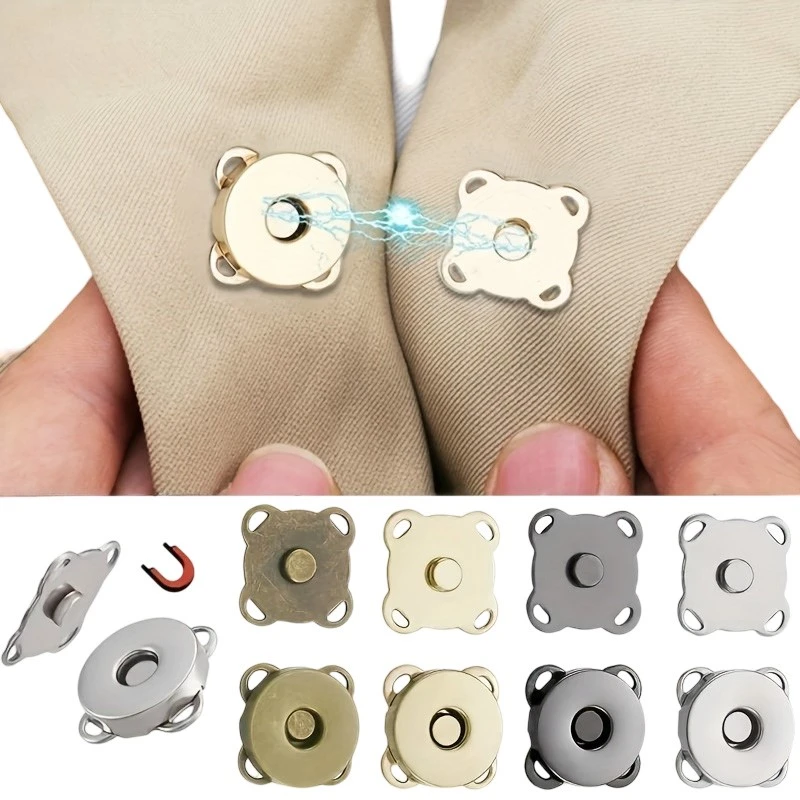
Types of Magnetic Closure Systems
1. Magnet-to-Magnet Systems
○ Comprises two magnets with opposing poles (N-S alignment).
○ Best for: Lightweight fabrics, removable panels.
○ Caution: Incorrect polarity alignment prevents closure.
2. Magnet-to-Ferrous Metal Systems
○ Uses one magnet and a steel disc/washer.
○ Best for: Heavy-duty applications (bags, upholstery).
○ Advantage: No polarity alignment is required.
Tools & Materials
• Pair Components:
○ Neodymium magnets (e.g., 3 mm x 1 mm discs, N35 grade)
○ Matching steel washers (for magnet-to-metal systems)
○ Fabric-encased magnetic snaps (commercial kits recommended for beginners)
• Fabric: Use interfacing to reinforce attachment points.
• Adhesive: Industrial-strength epoxy (e.g., JB Weld) for glue-on methods.
• Thread: Upholstery-grade polyester thread for sew-on applications.
Professional-Grade Construction Steps
Method 1: Sewn Magnetic Closure (Durable)
1. Reinforce Fabric: Iron interfacing to the wrong side where closures will attach.
2. Mark Alignment: Use chalk to mark positions on both fabric layers. Ensure polarity alignment if using two magnets.
3. Attach Components:
○ Place the magnet (or steel washer) on the wrong side of the top fabric layer.
○ Secure with a tight spiral stitch or rivet.
○ On the bottom layer, attach the opposing magnet (N-S polarity) or steel piece.
4. Test Functionality: Verify closure strength by pulling layers apart vertically (≥5 lb force required for bags).
Method 2: Adhesive Magnetic Closure (Light-Duty)
1. Surface Prep: Clean fabric with isopropyl alcohol to remove oils.
2. Apply Epoxy: Use a toothpick to spread epoxy on the magnet's back.
3. Attach & Align: Press the magnet onto the fabric, aligning with its paired component on the opposite layer.
4. Cure: Weight the closure under a book for 24 hours.
Common Errors & Fixes
|
Issue |
Cause |
Solution |
|
Weak hold |
Polarity mismatch |
Flip one magnet to reverse poles |
|
Fabric tearing |
Unreinforced material |
Add interfacing or use denim/Canvas |
|
Magnet detachment |
Poor adhesive choice |
Replace glue with epoxy + stitching |
Technical Considerations
1. Magnetic Strength:
○ Neodymium magnets (N52 grade) provide 12+ lb pull force but require protective coatings to prevent corrosion.
○ Ceramic magnets are weaker but heat-resistant.
2. Polarity Testing:
○ Use a compass: The end of the magnet attracted to Earth's north is its south pole (label with "S").
3. Safety Standards:
○ Comply with ASTM F963-17 (toy safety) if creating children's products.
Advanced Applications
1. Invisible Closures: Embed magnets between fabric layers using a slit-and-seal technique.
2. Adjustable Positioning: Use magnetic strips for customizable closures (e.g., yoga mats, tool rolls).
Final Note: Commercial magnetic snap kits (e.g., Dritz® or KAM Snap®) simplify DIY projects with pre-aligned polarity and reinforced bases. For heavy-use items like coats or luggage, prioritize metal-enclosed units to prevent magnet fracturing.
By addressing material science principles and safety protocols, this guide ensures reliable magnetic closures suitable for professional craftsmen and hobbyists alike.


