


The midpoint of the bar magnet is suspended with a thin line, and when it is stationary, its two ends will point to the south and north of the earth, the end pointing to the north is called the north pole or N pole, and the end pointing to the south is the guide pole or S pole.
If you think of the earth as a large magnet, then the earth's geomagnetic north pole is the guide pole, and the geomagnetic south pole refers to the north pole. Between magnets and magnets, the poles of the same name are repulsed and the poles of different names are attracted. Therefore, the compass repels the South Pole, the north arrow repels the North Pole, and the compass attracts the north arrow.
Extended Information:
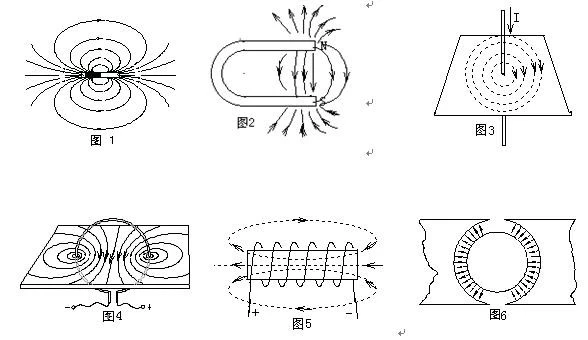
The magnetic field distribution of the magnet is independent of the shape of the magnet, but is related to the direction of the magnet and the number of magnetizing poles. It can be filled into two poles or multiple poles, but no matter how it is charged, the two poles of the magnet are distributed in pairs of intermediate planes. The magnetic poles presented by the entire magnet are the vector sum of the individual magnetic poles.
The magnetic field distribution of the magnet is independent of the shape of the magnet, but is related to the direction of the magnet and the number of magnetizing poles. It can be filled into two poles or multiple poles, but no matter how it is charged, the two poles of the magnet are distributed in pairs of intermediate planes. The magnetic poles presented by the entire magnet are the vector sum of the individual magnetic poles.


