


The production of sintered Neodymium Iron Boron (NdFeB) magnets begins with the melting process, where raw materials are melted and alloyed to create high-performance magnetic materials. Below are the key steps involved in the NdFeB magnet melting process:
1. Raw Material Preparation
Before melting, the raw materials must be accurately weighed and prepared. The main components include:
Neodymium (Nd) – The primary rare earth element that provides strong magnetic properties.
Iron (Fe) – The base metal that forms the magnetic structure.
Boron (B) – Enhances the magnet's hardness and coercivity.
Additional elements such as Dysprosium (Dy), Terbium (Tb), Cobalt (Co), Aluminum (Al), Copper (Cu), and Niobium (Nb) may be added to improve performance, temperature resistance, and corrosion resistance.
2. Vacuum Induction Melting (VIM)
The prepared raw materials are melted in a vacuum induction furnace to prevent oxidation and contamination. This process includes:
Heating to High Temperatures – The furnace heats the materials to approximately 1300–1600°C.
Induction Stirring – The molten metal is stirred using electromagnetic induction to ensure uniform distribution of elements.
Degassing – Impurities and unwanted gases are removed under vacuum conditions to improve material purity.
3. Alloy Cooling and Crushing
After the molten NdFeB alloy is fully mixed, it is poured into a mold and rapidly cooled using a strip casting process or ingot casting.
The cooled alloy is then crushed into coarse particles before further refinement.
4. Hydrogen Decrepitation (HD) and Jet Milling
The coarse alloy particles undergo hydrogen decrepitation, where hydrogen gas is introduced to break the material into fine, brittle pieces.
These fine pieces are then processed through jet milling, resulting in ultrafine NdFeB powder with a particle size of 3-5 microns, which is necessary for sintering.
5. Further Processing
After the melting process, the refined NdFeB powder undergoes:
Pressing & Orientation – The powder is pressed into a desired shape while aligning magnetic domains.
Sintering & Heat Treatment – The pressed material is heated to high temperatures to achieve full densification and optimal magnetic properties.
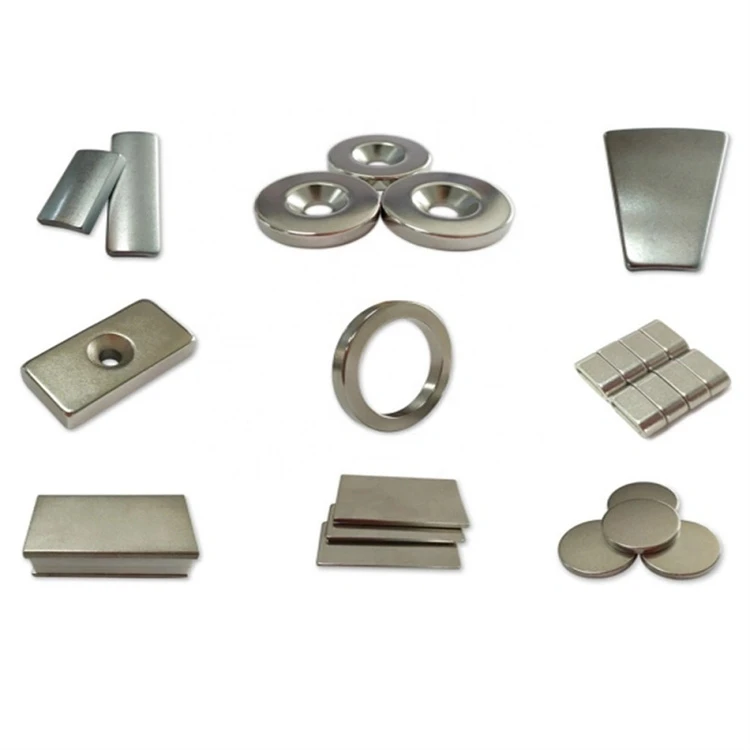
Machining & Coating – The sintered magnet is cut, ground, and coated for protection against corrosion.
Magnetization – The final step involves applying a strong magnetic field to activate the magnet's properties.
Conclusion
The melting process is a crucial step in NdFeB magnet production, determining the material's magnetic strength and quality. By using vacuum induction melting, precise alloy composition, and controlled cooling, manufacturers can produce high-performance NdFeB magnets for industrial applications.
For high-quality NdFeB magnets, feel free to contact our factory for consultation and purchasing!


