Neodymium Iron Boron (NdFeB) magnets are known for their exceptional strength and are often used in a wide range of applications, from electronics to medical devices. Magnetizing NdFeB magnets is a key process that significantly impacts their magnetic properties. Here's a look at how NdFeB magnets are magnetized:
1. Magnetization Process of NdFeB Magnets
Magnetization Orientation:
NdFeB magnets are typically magnetized along their axis of symmetry, which is the direction that provides the strongest magnetic field. For example, a cylindrical NdFeB magnet is magnetized along its axis (from one end to the other).
This orientation ensures that the magnetic domains (tiny regions where magnetic moments align) are aligned in the direction that maximizes the magnet's magnetic force.
Application of a Strong Magnetic Field:
To magnetize NdFeB magnets, a very strong external magnetic field is required. This field is typically generated by an electromagnet or a pulse magnetizer. The strength of the magnetic field applied during the magnetization process is significantly higher than the coercivity (resistance to demagnetization) of the NdFeB material.
The magnetic field is applied in a very brief but powerful pulse, often in microseconds, to ensure that the magnetic domains within the NdFeB material align in the desired direction.
Permanent Magnetization:
Once the strong external magnetic field is applied, the magnetic domains in the NdFeB material align in the direction of the field. This process is irreversible, meaning the NdFeB magnet becomes permanently magnetized, retaining its magnetic properties even after the external field is removed.
The final strength of the magnet depends on factors such as the material's composition, the strength of the external field, and the quality of the sintering process.
2. Factors Affecting the Magnetization of NdFeB Magnets
Magnetic Field Strength:
The strength of the external magnetic field is crucial in ensuring full magnetization of the NdFeB magnet. The stronger the external field, the greater the alignment of the magnetic domains, resulting in a stronger permanent magnet.
Material Properties:
The quality of the raw NdFeB material also influences how effectively it can be magnetized. Factors such as the purity of the neodymium, iron, and boron components, as well as the grain structure of the sintered magnet, play a role in its magnetization efficiency.
Temperature:
Temperature can affect the magnetization process. If the temperature is too high during magnetization, it can lead to the loss of magnetic properties (known as thermal demagnetization). Therefore, NdFeB magnets are magnetized at a temperature lower than their maximum operating temperature to ensure optimal performance.
3. Types of Magnetization
Axial Magnetization:
This is the most common type of magnetization for NdFeB magnets, where the magnetic field is applied along the axis of the magnet. This is often used for cylindrical, disc, and ring-shaped NdFeB magnets.
Radial Magnetization:
In some applications, NdFeB magnets are magnetized radially, where the magnetic field runs from the center of the magnet to the edges. Radial magnetization is typically used for ring magnets, such as those found in motors.
Multi-Poles Magnetization:
For certain applications, NdFeB magnets can be magnetized with multiple poles on the same magnet. For example, magnets used in loudspeakers or motors may be magnetized with multiple poles to produce a more complex magnetic field.
4. Applications of Magnetized NdFeB Magnets
Once magnetized, NdFeB magnets are used in various applications due to their high magnetic strength:
Electric Motors: NdFeB magnets are used in brushless DC motors, which are essential in appliances, electric vehicles, and robotics.
Speakers and Microphones: High-performance speakers often utilize magnetized NdFeB magnets to enhance sound quality.
Medical Devices: Magnetized NdFeB magnets are used in MRI machines and other diagnostic tools.
Magnetic Separators: NdFeB magnets are employed in industrial processes to separate ferrous materials from non-ferrous materials.
Conclusion
Magnetizing NdFeB magnets involves applying a strong external magnetic field that aligns the magnetic domains within the material. This results in a permanent magnet with strong and lasting magnetic properties. Factors such as the strength of the applied field, the material's composition, and the operating temperature all play a role in the success of the magnetization process.
At QCM, we are experts in manufacturing high-quality NdFeB magnets and can assist you in selecting the ideal magnet for your specific needs. Feel free to visit our factory or contact us for more information and personalized advice on magnetization techniques.
The following Xiaobian sorted out some common Ndfeb strong magnet manufacturers of strong magnet magnetization
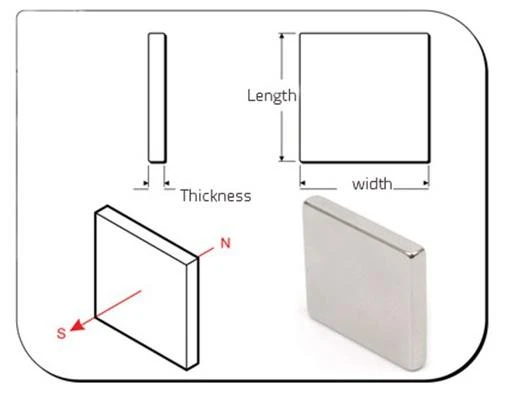
Magnetic mode and direction of block magnet
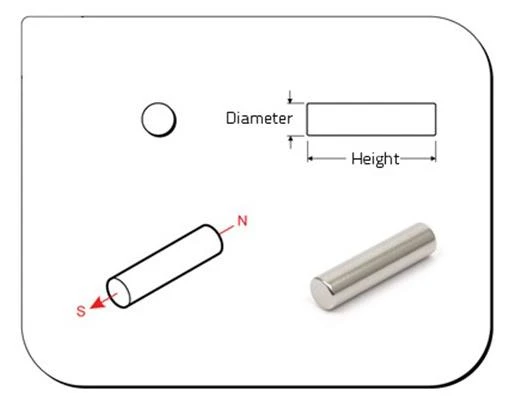
The method of magnetizing a cylindrical magnet
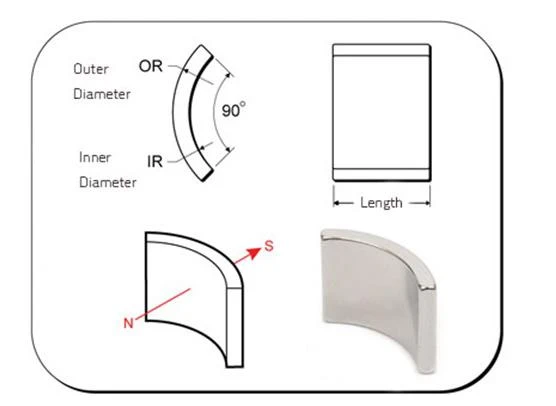
Mode of magnetizing tile magnet