


Magnets are fundamental to many technologies and industries, ranging from consumer electronics to industrial machinery. However, not all magnets are the same. There are four primary types of magnets: permanent magnets, temporary magnets, electromagnets, and superconductors. Each type has distinct characteristics, strengths, and applications. In this article, we'll explore these types in detail to help you understand their differences and uses.
1. Permanent Magnets
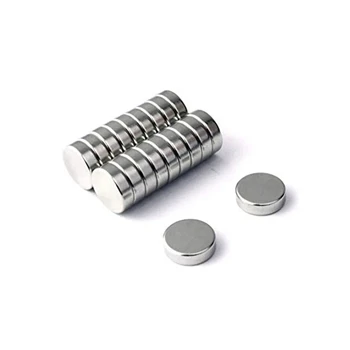
Permanent magnets are magnets that retain their magnetic properties without requiring an external power source. They are made from materials that are magnetized and maintain their magnetism over time.
Key Features of Permanent Magnets:
They generate a consistent magnetic field.
They don't require electricity or external forces to maintain their magnetism.
Common materials include neodymium (NdFeB), samarium cobalt (SmCo), alnico, and ferrite (ceramic).
Applications of Permanent Magnets:
Consumer electronics (speakers, headphones, microphones).
Motors and generators.
Magnetic separation equipment.
Toys and crafts.
Example: Neodymium magnets, known for their incredible strength, are widely used in electric vehicles and renewable energy technologies like wind turbines.
2. Temporary Magnets
Temporary magnets only exhibit magnetic properties when exposed to a magnetic field. Once the external magnetic field is removed, these magnets lose their magnetism.
Key Features of Temporary Magnets:
They are made of materials like soft iron, which are easily magnetized and demagnetized.
They have a weaker magnetic force compared to permanent magnets.
Applications of Temporary Magnets:
Paperclips, nails, and pins can act as temporary magnets when placed near a strong magnet.
Electromagnetic cranes, where materials are magnetized temporarily to lift heavy objects.
Electric relays and solenoids.
Example: A nail becomes magnetized when it's close to a strong magnet but loses its magnetism once removed.
3. Electromagnets
Electromagnets are magnets created by passing an electric current through a coil of wire, typically wrapped around a core made of ferromagnetic material (e.g., iron). The magnetic field disappears when the current stops.
Key Features of Electromagnets:
The strength of the magnet can be controlled by adjusting the current.
They can be turned on and off, offering great flexibility.
They are not naturally magnetic but become magnetized through electricity.
Applications of Electromagnets:
MRI machines in the medical field.
Electric motors and transformers.
Magnetic lifting devices in industrial environments.
Doorbells and electric locks.
Example: Electromagnets in high-speed trains, such as maglev trains, are used to levitate and propel the train with incredible efficiency.
4. Superconducting Magnets
Superconducting magnets are a type of electromagnet made from materials that, when cooled to extremely low temperatures, lose all electrical resistance. This allows them to generate incredibly powerful magnetic fields.
Key Features of Superconducting Magnets:
They require cooling with liquid helium or nitrogen to achieve superconductivity.
They produce stronger magnetic fields than traditional electromagnets.
They are highly efficient due to zero electrical resistance.
Applications of Superconducting Magnets:
Particle accelerators in physics research (e.g., the Large Hadron Collider).
High-resolution imaging in MRI machines.
Fusion reactors for energy research.
Advanced magnetic levitation applications.
Example: Superconducting magnets are essential in cutting-edge research labs and medical facilities.
Key Differences Between the 4 Types of Magnets
| Magnet Type | Key Property | Typical Use Cases |
|---|---|---|
| Permanent Magnets | Retains magnetism permanently | Motors, speakers, magnetic separators |
| Temporary Magnets | Magnetism only in the presence of a field | Electromagnetic cranes, solenoids, electric relays |
| Electromagnets | Magnetism controlled by electricity | MRI machines, industrial lifting, transformers |
| Superconducting Magnets | Extremely strong, efficient fields | Particle accelerators, fusion energy, advanced MRI |
How to Choose the Right Magnet for Your Application?
If you need consistent, long-lasting magnetism, choose permanent magnets.
For temporary applications, such as lifting heavy metal objects momentarily, use temporary magnets.
If flexibility and control are required, such as in motors or MRI machines, electromagnets are the ideal choice.
For cutting-edge technologies that require extremely strong magnetic fields, superconducting magnets are the go-to option.
Why Choose QCM for Your Magnet Needs?
At QCM, we specialize in manufacturing high-quality magnets tailored to your specific needs. Whether you need permanent magnets, such as neodymium or ferrite magnets, or advanced electromagnetic solutions, our team of experts ensures top-notch performance and durability. With state-of-the-art production facilities and extensive R&D capabilities, we provide solutions for industries ranging from automotive and electronics to medical and renewable energy.
Conclusion
Understanding the four types of magnets-permanent, temporary, electromagnets, and superconducting magnets-helps you choose the right solution for your application. Each type has unique properties that make it suitable for specific industries and use cases. At QCM, we offer a wide range of magnets designed to meet diverse requirements with unmatched quality and precision. Contact us today to learn more about our magnetic solutions!


