


Concrete formwork refers to a complete set of structural systems of newly poured concrete formwork and supporting formwork, and the classification of formwork has a variety of different staged methods, which are divided into planar formwork and curved formwork according to the shape; According to the force conditions, it is divided into load-bearing and non-load-bearing templates.
Quantity calculation
Unless otherwise specified, the quantity of cast-in-place concrete and reinforced concrete formwork is calculated in ㎡ according to the area of the contact surface between concrete and formwork.
1. The height of the support mold of cast-in-place reinforced concrete columns, beams, slabs and walls (that is, the height between the outdoor floor and the bottom of the board or between the board surface and the bottom of the board) shall be subject to within 3.6m, and the part exceeding 3.6m shall increase the amount of supporting engineering according to the excess part.
2. Holes with a single hole area of cast-in-place reinforced concrete wall and plate within 0.3㎡ shall not be deducted, and the formwork of the side wall of the hole shall not be increased; when the area of the single hole is outside 0.3㎡, it shall be deducted, and the area of the formwork of the side wall of the hole shall be incorporated into the engineering quantity of the wall and plate formwork.
3. The cast-in-place reinforced concrete frame is calculated according to the relevant regulations of beams, plates, columns and walls, and the wall columns are attached and incorporated into the wall engineering quantity calculation.
4. If the height of the cup-shaped basic cup mouth is greater than the length of the large side of the cup mouth, set the high cup basic quota item.
5. The overlapping parts connected by columns and beams, columns and walls, beams and beams, as well as the beam heads and plate heads protruding into the wall, do not calculate the formwork area.
6. The exposed surface of the structural column should calculate the formwork area according to the exposed part. The structural column and wall interface does not calculate the formwork area.
7. Cast-in-place reinforced concrete cantilevered slabs (awnings, balconies) are calculated according to the horizontal projection area of the dimensions of the outer part. Cutting out the corbel beams and board side formwork outside the wall is not counted separately.
8. Cast-in-place reinforced concrete stairs are calculated based on the horizontal projection area of the exposed surface size, excluding the area occupied by stairwells smaller than 500mm. Side formwork such as staircase steps, step board platform beams, etc., are not calculated separately.
9. The concrete step does not include the ladder belt, calculated according to the horizontal area of the step size, and the formwork area is not calculated on both sides of the step end.
10. The small pool groove of cast-in-place concrete is calculated according to the peripheral volume of the component, and the formwork inside, outside and bottom of the pool groove is not calculated separately.
Construction process
Frame column measurement pay-off → column bottom surface plastering leveling → determine the support mold scheme, mold matching→ template production→ load-bearing scaffolding erection→ column rebar lashing → formwork site installation, correction, reinforcement→ concealed engineering acceptance→ pouring frame column concrete → concrete curing→ beam measurement pay-off →beam bottom mold installation, correction, reinforcement→ beam reinforcement lashing → plate both sides of the template installation, correction, reinforcement→ platform plate formwork installation, correction, reinforcement→ platform plate steel bar lashing → beam, plate embedded installation → beam, plate concealment project acceptance → beam, Slab pouring concrete→ concrete curing→ frame column measurement pay-off
Fair-faced concrete formwork
peculiarity
1. Fair-faced concrete project is a concrete project that directly uses the natural texture of concrete forming as a finishing effect, and the final effect of concrete surface quality mainly depends on the design, processing, installation and node detail treatment of fair-faced concrete formwork.
2. Surface characteristics of the formwork: flatness, finish, seams, eyelets, lines, decorative patterns and various pollutants are rubbed onto the concrete surface. Therefore, fair-faced concrete formwork pays more attention to formwork selection, formwork blocking, panel division, alignment of tension bolts and surface flatness of formwork.
Construction characteristics
When installing the formwork, follow the principle of first inside, then outside, first horizontal wall, then longitudinal wall, first corner mold and then transverse die joint. Pay attention to the protection of the panel when hoisting, and ensure the verticality and intersection of the open seam and Zen seam. The formwork accessories should be tightened with uniform force to ensure that the force of adjacent formwork accessories is consistent and avoid uneven deformation of the template.
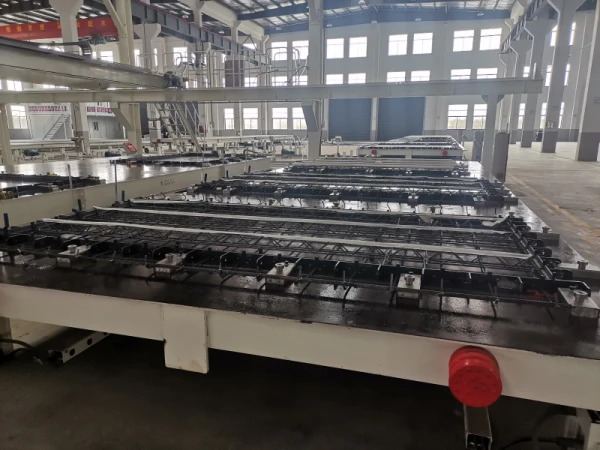
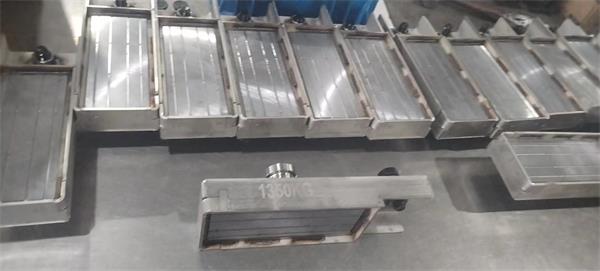
QCM factory produces high quality precast concrete formwork in specifications including 1000kg, 1350kg, 1500kg and 1800kg. Please send your enquiry


