


How are magnets used in high speed rapier looms?
In 1765, Hargreaves invented the "Jenny textile machine" and opened the prelude to the industrial revolution. It follows that textile machinery has played a significant role in the industrial revolution, and its advancement has led to the production of textiles on a large scale. Over time, the complexity of textile machinery continued to increase, and innovation has allowed for the integration of new technologies. Today's very innovative textile machine is the high-speed rapier textile machine.
High-speed rapier textile machines are incredibly efficient and reliable tools used to produce high-quality textiles in an industrial setting. These machines use rapier technology to transport the weft yarn across the width of the fabric being woven, resulting in a smooth and even finish.
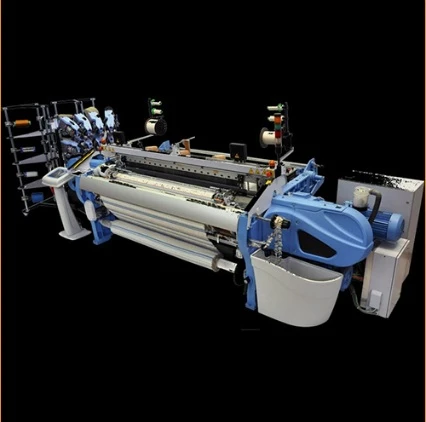
The picture shows the weft insertion principle of high-speed rapier loom.
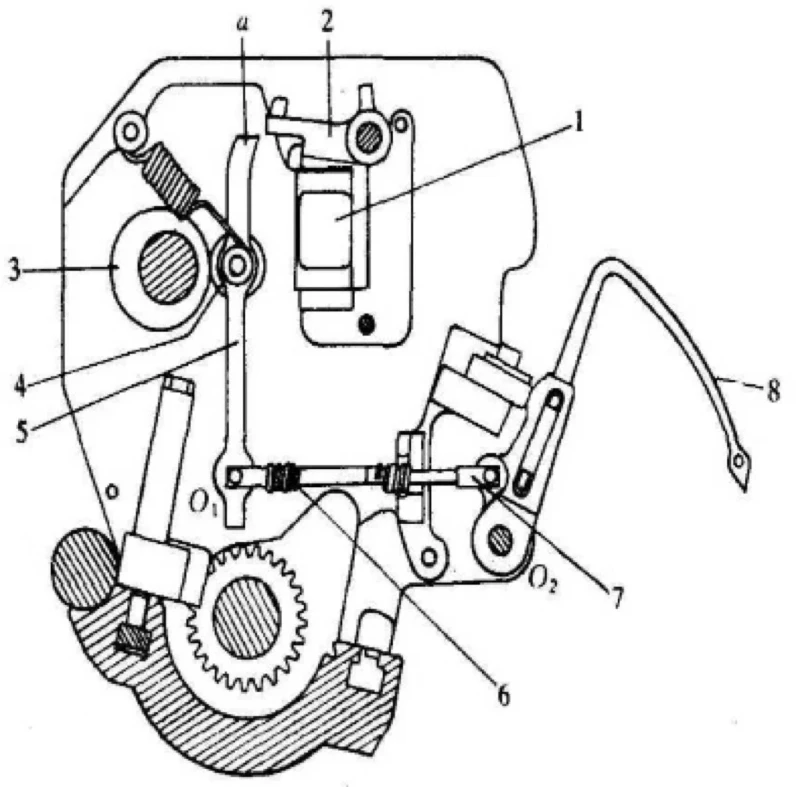
PS: 1 - Electromagnet
Electromagnet 1 is powered off or energized according to the command signal issued by the pick signal device, and the prop head 2 is warped or hemmed up by the electromagnetic force.
When the CAM 3 is rotating, the lever 5 is swung around the 0 axis by the rotor 4, and the Q1 axis is temporarily stationary due to the action of the compression spring 6.
If the prop head is bent down and the upper end of the lever is held up, the rotation force of the CAM forces its lower end axis A to move to the right, so as to overcome the force of the compression spring 6 and move the transverse rod 7 stone, driving the picking rod 8 to enter the working position around axis 0 and complete the picking action.
It can be seen that magnets play a very important role in this loom.
So, how do the signal plates of the rapier loom connect to the magnets? The signal plate of the rapier loom is composed of a number of magnets, and their alignment is: the entrance end of the general magnet should be aligned with the axis of the movable frame slide block of the knitting machine, and the exit end should be aligned with the action axis of the rapier hydraulic cylinder.
Overall, Magnets are used in textile machinery for several purposes. They are used to generate a magnetic field, which helps in the separation of impurities during the production process. They are also used in the carding process to keep the carding surface clean and efficient.
In spinning machines, magnets are used in the drafting zone to control the drafting forces. Magnets are also used in the yarn winding process to ensure smooth operations, and in the weaving process, magnets are used to hold the warp threads firmly in place.
The introduction of magnets in textile machinery has led to impressive advancements in textile production. The use of magnets has increased the efficiency of textile machines, leading to better quality products with less wastage. Additionally, the use of magnets has helped to reduce downtime as they require little maintenance and are incredibly reliable.
Below are the parameters of our current textile machinery magnets, you can go to the product page for more details
| 10*10*2.5mm magnetic textile magnet | ||
| Picture |  |
 |
| Video | ||
| Brand name | QCM | QCM |
| Grade | N35, Neodymium Magnet (M.H.SH.UH.EH.AH) | N35, Neodymium Magnet (M.H.SH.UH.EH.AH) |
| Place of origin | Xiamen, Fujian Provice, China | Xiamen, Fujian Provice, China |
In conclusion, the use of magnets in textile machinery has revolutionized the industry. They have been instrumental in the development of efficient and reliable machines that produce high-quality textiles. With continued advancements in technology, we can expect more application of magnets in textile machinery and an even greater improvement in the textile industry as a whole.
Part of the content and pictures from the network, if there is copyright infringement, pleasecontact us within 24 hours to delete.


